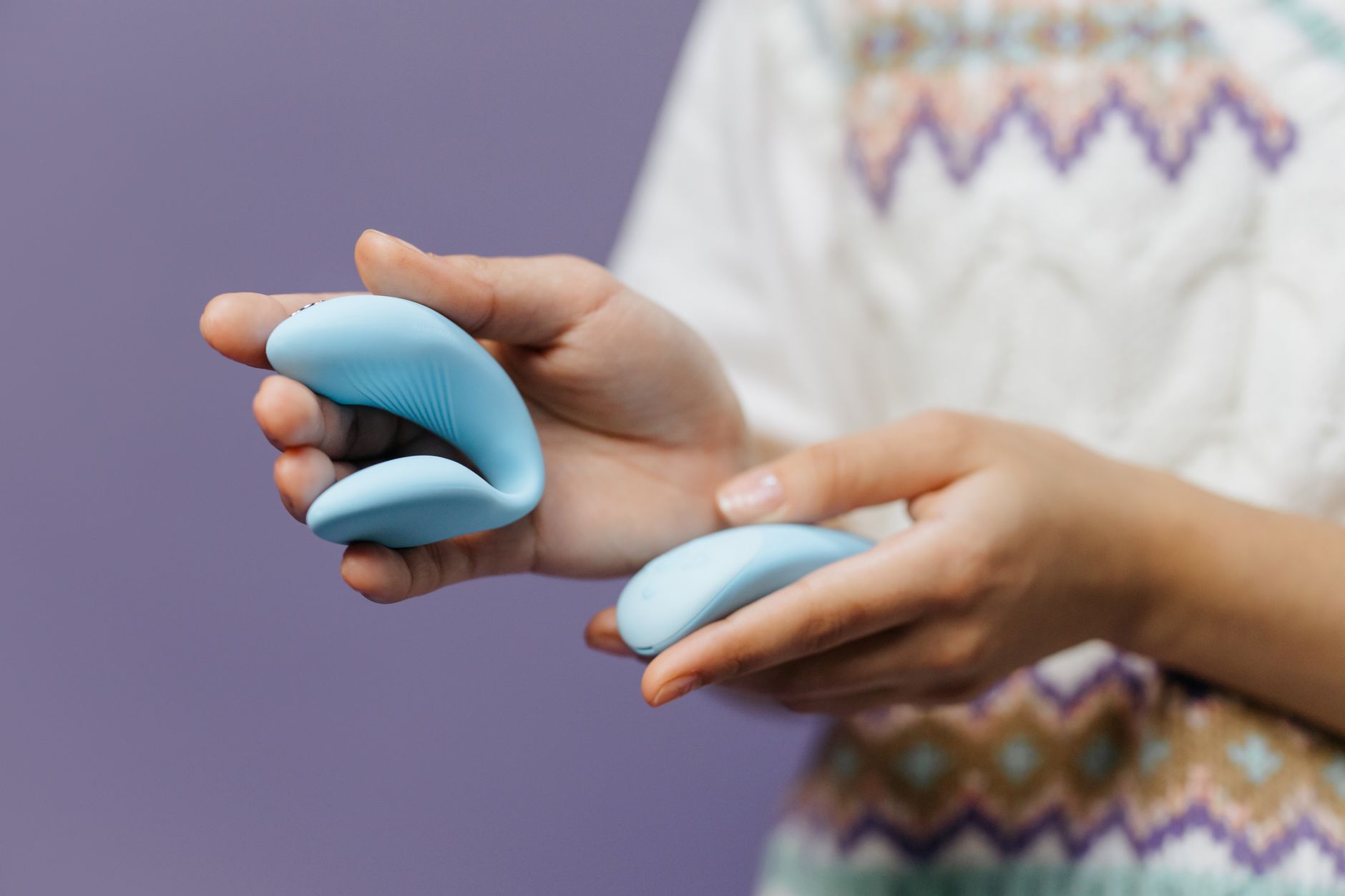
Here's the thing about choosing a clitoral toy
You're not just picking something for tonight. You're deciding what's going to be in your bedside drawer in two years. Most conversations about vibrators focus on the first orgasm, the novelty, the buzzy excitement of something new. But long-term pleasure is a completely different question. It's about what actually sustains sensitivity, what doesn't numb you out, and what still feels good when you're using it three times a week for the next 24 months.
Let's talk about why lemon vibrators and traditional vibrators deliver such different experiences over time.
The fundamental difference: vibration versus suction
Traditional clitoral vibrators rely on rapid back-and-forth or circular oscillations. They work through friction and direct pressure. You press the vibrating head against your clitoris, and the motor does the work. It's fast, it's intense, and yes, it works.
Lemon vibrators use a different mechanism entirely: suction-based stimulation. Think of it as a gentle pulse of pressure and release, mimicking the motion of oral sex. Instead of buzzing against tissue, the technology creates a seal and rhythmically draws the clitoris into the opening. It's sensation through traction, not vibration.
That difference matters enormously over time.
Why sensation changes with traditional vibrators
Here's what happens to your nervous system when you use traditional vibration repeatedly. Your nerve endings adapt. Neurologically, this is called sensory accommodation. Your body gets used to the stimulus, so the same intensity that felt amazing in week one starts to feel... fine. Less sharp. You find yourself turning up the intensity, chasing that original feeling. Then your body adapts to that new level. Six months in, you're running the toy at maximum power and barely feeling it.
There's also the issue of tissue response. Repeated high-frequency vibration can cause temporary numbness or desensitization in the area. For some people, this means needing longer recovery periods between sessions. For others, it means the clitoris feels raw or irritated if they use the toy frequently.
And here's the uncomfortable truth: traditional vibrators, used daily or several times weekly over years, can sometimes lead to difficulty reaching orgasm without that specific stimulation. Your body becomes conditioned to expect that particular type and intensity of input.
Why lemon clitoral vibrators sustain pleasure differently
Suction-based stimulation works with your body's natural responses instead of overriding them. Because the mechanism is gentler and uses varying pressure patterns rather than relentless vibration, your nerve endings don't adapt as quickly. The sensation stays novel. You're not chasing numbness.
Second, the suction effect stimulates a broader area of tissue. It's not just the visible clitoris but also the internal clitoral structure. This means fuller stimulation and often more intense, longer-lasting orgasms. Clients often report that suction-based toys feel less one-note than traditional vibrators after a few months of use.
Third, because the intensity is generated through pressure and rhythm rather than pure vibration speed, you have more nuanced control. You can use a lemon vibrator at lower settings and still feel plenty of sensation. That means less need to constantly increase the power. Your body doesn't escalate its adaptation demands the way it does with traditional vibrators.
The comfort factor over months and years
Here's something nobody talks about: comfort during and after use matters way more than people think. Traditional vibrators, especially the bullet-style ones, can cause fatigue in your hand and wrist if you're using them regularly. They also tend to create more direct friction on delicate tissue, which for frequent users can lead to irritation or even small abrasions.
Lemon vibrators have a larger surface area and distribute pressure more evenly. The suction seal means you're not creating friction the same way. Users report far fewer complaints about soreness or irritation, even with frequent use. Your tissue stays healthier. That means sustainable pleasure, not just pleasure interrupted by discomfort.
One more thing: vibration can be loud. If you're sharing a home or apartment, traditional vibrators often mean turning up the volume or the intensity because the motor noise masks the sensation. Lemon vibrators are significantly quieter because suction-based technology simply doesn't require the same motor speed. That's not just a convenience factor. It's the difference between feeling comfortable using your toy regularly versus using it only when everyone's asleep.
Sensitivity changes and how each toy responds
If your sensitivity changes, traditional vibrators don't adapt well. You're stuck with the same oscillation pattern. If sensitivity increases, too much. If it decreases, you're back to cranking the power. Either way, you're adjusting the toy to fit your body instead of the toy fitting you.
Lemon vibrators offer multiple intensity settings and pattern variations. More importantly, because suction-based stimulation is less invasive, it works across a wider range of sensitivity states. Someone experiencing hormonal changes, reduced sensation from other causes, or increased sensitivity after starting antidepressants often finds that lemon vibrators adapt better to fluctuating sensitivity than traditional options.
The cost of long-term pleasure
Yes, lemon vibrators typically cost more upfront. They're also built differently. Better motors, more durable seals, higher-quality silicone that doesn't degrade as quickly. That investment matters when you're thinking in terms of years instead of months.
Traditional vibrators are cheaper initially, but users often find themselves replacing them more frequently. Either the motor burns out, the battery degrades faster, or they simply stop working as well. The cost per year of actual use sometimes ends up nearly identical. Except one gives you sustained pleasure the whole time, and the other gives you diminishing returns.
When traditional vibrators still make sense
Lemon vibrators aren't a universal answer. Some people prefer the directness of traditional vibration. Some have tried suction and it wasn't their thing. That's completely valid. If you know you love traditional vibrators and you've been using them happily for years, don't switch just because someone told you to.
What matters is intentionality. If you're choosing a toy for the long term, know what you're trading off. Traditional vibrators might give you faster, more intense orgasms in the short run but potentially less sustained pleasure over years. Lemon vibrators might take a tiny bit longer to figure out at first but deliver more consistent satisfaction long-term.
Building a practice that lasts
Here's what I see in my practice: people who think strategically about their pleasure tools last longer in their sexual practices. They use their toys more consistently. They report higher satisfaction over time. They're not constantly needing to troubleshoot or adapt.
If you're starting from scratch or reconsidering your setup after years of using the same traditional toy, try thinking about it like you would any long-term investment. What's going to feel good not next week but in six months? What's going to keep delivering the same pleasure without requiring you to keep turning up the intensity? What's going to stay comfortable for frequent use?
For most people asking those questions, lemon vibrators provide a more thoughtful answer than traditional vibration.
FAQ: Lemon Vibrators vs. Traditional Clitoral Toys
How long does it actually take to adapt to a lemon vibrator if I've only used traditional vibrators?
Most people need about three to five sessions to get the hang of positioning and pressure. Your body isn't used to suction-based sensation, so the first time might feel strange or unfamiliar. That's completely normal. Give yourself at least a week of occasional use before deciding if it's for you. By session five, most users find it clicks. The adaptation period is worth it because once you're comfortable, the long-term payoff is significant.
Can I use both types of toys, or will that confuse my body?
You absolutely can. Variety is actually healthy. Using traditional vibrators sometimes and lemon vibrators other times prevents your body from becoming too adapted to one specific stimulus. Think of it like cross-training. Mixing it up keeps your nervous system engaged and pleasure stays novel. Just be aware that if you're using traditional vibrators frequently, they might become your default, and you might not experience as much benefit from the lemon vibrator.
Do lemon vibrators work if I have reduced sensitivity or numbness?
Yes, often better than traditional vibrators. Because suction-based stimulation works through a different nerve pathway and creates broader tissue engagement, it frequently awakens sensation that traditional vibration doesn't reach. If you've been struggling with reduced sensation or numbness, suction-based toys are genuinely worth trying. That said, if the numbness is from a medical condition, talk to your doctor first.
Will a lemon vibrator give me weaker orgasms than a traditional vibrator?
Usually the opposite. Because suction-based stimulation engages more tissue and creates a fuller sensation, many people report stronger, longer-lasting orgasms. They might take slightly longer to build, especially at first, but they're often more intense. After a few weeks of regular use, most people wouldn't go back to traditional vibrators because the difference is genuinely noticeable.
How do I know if I'm adapting too quickly to my current vibrator?
You're adapting too quickly if you're regularly increasing the intensity because the current level isn't cutting it anymore. If you started at level three or four and after three months you're at level seven or eight, your body is accommodating. That's the signal that you might need to switch up your approach or try a different technology altogether.
If I'm using a lemon vibrator with a partner, what's different compared to a traditional vibrator?
Much less vibration noise means you can have conversations. The broader stimulation area means a partner can see and feel what's happening more easily. The slower pulse patterns often feel less jarring if a partner is involved. Some couples find that suction-based toys feel less clinical or medical compared to traditional vibrators. It's more about intimacy and less about performance.
Long-term pleasure is worth the thought
Choosing the right clitoral toy isn't just about what feels good today. It's about what's going to keep working for you, what's going to stay comfortable, and what's going to sustain that connection to pleasure over years. Lemon vibrators deliver on that promise in ways traditional vibrators often can't, especially over the long haul. Your pleasure matters. It deserves an investment that lasts.
If you have questions about which toy might be right for your body or your situation, reach out. That's what we're here for.