
Here's what changed, and why it matters
Your arousal used to arrive on its own schedule. Now it takes longer to build, and the path from zero to receptive feels less automatic than it did five years ago. This is wildly normal. It's also completely fixable.
The shift happens for dozens of reasons. Age, medications, relationship length, stress, hormonal changes after stopping birth control, even just knowing your body better now and being less tolerant of rushed or ineffective stimulation. Whatever the cause, the solution isn't more intensity. It's strategic patience and a tool designed to work with slower arousal rather than against it.
A lemon clitoral vibrator, with its unique suction-based technology, is actually ideal for this exact situation. But you need to use it differently than you would have five years ago.
Why arousal builds slower (and what's actually happening)
Let's separate what feels true from what's actually happening in your body. You might assume sensation has dulled. Often it hasn't. What's changed is arousal ramp-up time. Your nervous system needs more input, more time, and sometimes more mental permission before blood flow to the clitoris increases and tissue engorges fully.
This is partly neurological. The pathways for arousal work better with sustained, consistent stimulation over time rather than quick intensity escalation. It's also partly psychological. Many people report that longer arousal times now coincide with better orgasms because the build creates more tension and anticipation.
The practical truth: you're not broken. You're just operating on a different timeline.
Budget at least 25 to 40 minutes
This is the single most important adjustment. If you've been allocating 10 minutes to foreplay and 5 minutes with a vibrator, you're working against your own physiology.
Plan for a full 25 to 40 minutes of combined foreplay and stimulation. This doesn't mean every session requires that investment. But when you want an orgasm, this is the realistic window. Some people find that once arousal begins, they can finish in 10 minutes. Others need the full 40. The only way to know is to give yourself the time.
If you're partnered, this is worth discussing upfront. "I need about 30 minutes to get fully aroused" is information your partner can plan around. Many couples find that longer foreplay actually improves the whole experience for both people.
Start without the lemon vibrator
Here's the counterintuitive part: don't reach for your lemon clitoral vibrator first. Use it as the finale to a longer foreplay sequence, not the opener.
Spend the first 15 to 20 minutes on whatever builds arousal for you. For some people, that's manual stimulation, kissing, or mental focus (reading erotica, fantasy, whatever works). For others, it's a partner's touch. The goal is to get blood flowing to the clitoris, to feel the tissues begin to engorge, to move from neutral into "interested."
Once you're at that 60 to 70 percent arousal threshold, that's when you introduce the lemon vibrator. The combination of already-activated tissue plus the specific suction sensation from the lem often creates a surge that wouldn't happen if you started with the vibrator alone.
Use lower settings longer
The lem comes with multiple intensity levels. When arousal is slower to build, your instinct might be to jump to higher levels. Don't. Go the opposite direction.
Start at setting one or two and stay there for at least 5 to 10 minutes. Let the sensation accumulate. This gives your nervous system time to recognize and respond to the stimulus. It's similar to how a long massage feels better than quick, hard pressure. The body needs time to integrate.
If you plateau at that level, then move to setting three. But rush the progression and you'll exhaust the effect before full arousal arrives. Patience creates more sensation than speed.
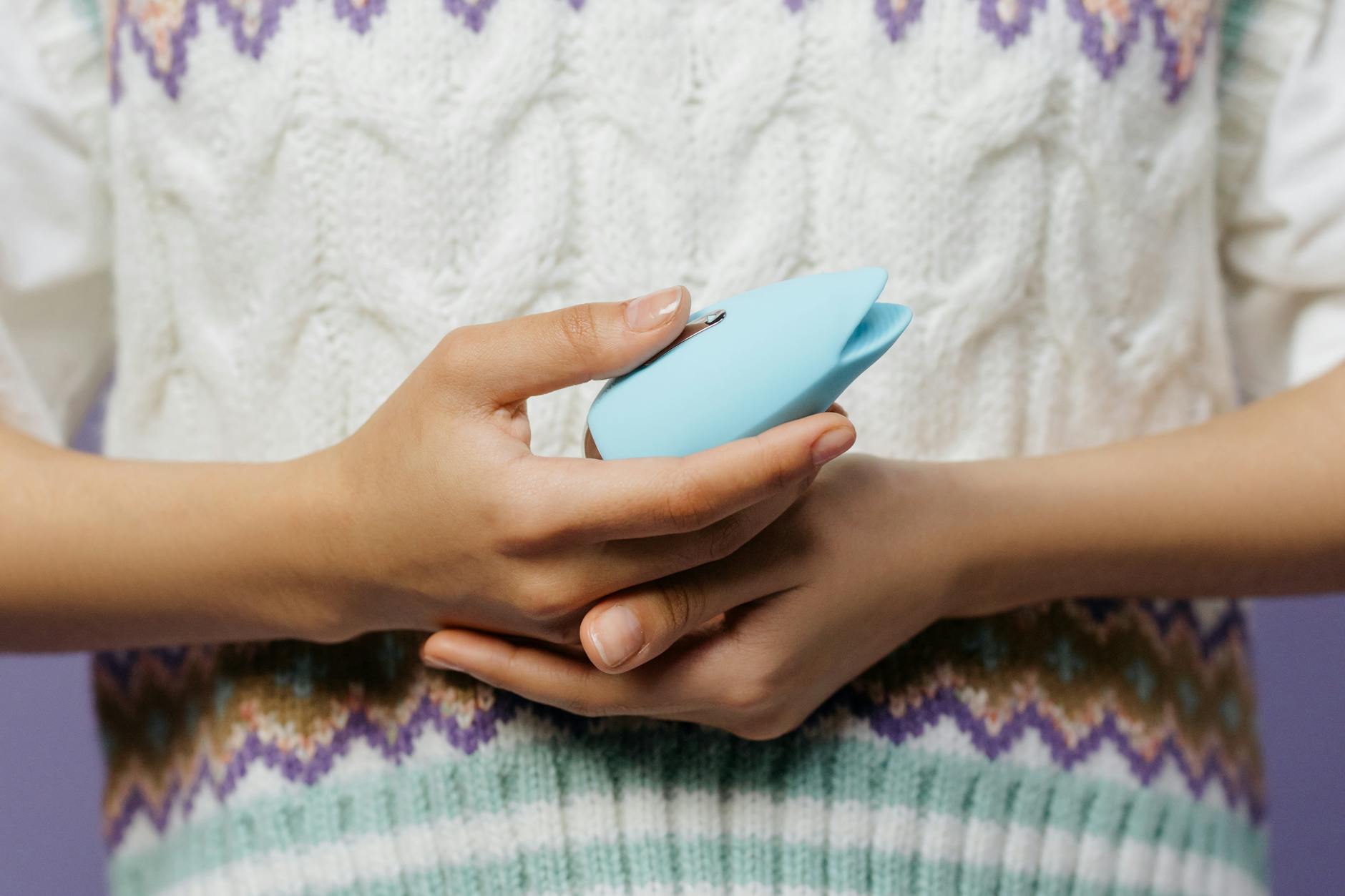
Photo by cottonbro studio on Pexels
Vary the angle and pressure, not the setting
Once you're on a lower setting, the way to escalate sensation is not by turning up the dial. It's by changing where and how the lemon vibrator contacts your clitoris.
Try gentle direct contact at the tip of the clitoris for a few minutes. Then shift slightly so you're stimulating the side. Then the hood area above. Small positional shifts keep the sensation fresh and recruit different nerve endings. Combined with time at a consistent intensity level, this creates arousal progression that feels natural rather than forced.
If your partner is involved, they can hold the vibrator steady while you move against it at your own pace. This gives you control over both pressure and angle without needing to manage the device yourself.
Create mental safety alongside physical time
Slower arousal often gets tangled up with performance anxiety. You worry you're taking too long. You second-guess whether it's working. You feel pressure to speed up to "normal."
All of that tension suppresses arousal further. Your sympathetic nervous system (the fight-or-flight branch) activates, which literally diverts blood away from your genitals and toward your limbs.
Instead, treat the longer timeline as information, not failure. Your body is telling you what it needs. If you can let go of the idea that slower is worse, the extended foreplay often becomes the best part. Many people report that the longer, slower arousal builds to more intense orgasms because of the accumulated tension.
If intrusive thoughts interrupt the process, have a gentle refocus. "That's just my mind. Back to sensation." No judgment.
The role of lubrication
With slower arousal, natural lubrication may take longer to arrive as well. This isn't a sign that anything's wrong. It's just part of the extended timeline.
Add water-based lubricant to the lem's suction cup and your vulva early in the session, even if you don't feel like you need it yet. Better to have it and not require extra than to introduce it mid-session and break your focus.
Lubricant also reduces friction on tissue that may be more sensitive when arousal is building slowly. This combination of time plus glide often unlocks the progression you're looking for.
How partners fit into the longer timeline
If you're with someone, the extended arousal time is actually an opportunity, not a burden. You get 25 minutes of close contact, attention, and physical touch before the vibrator even arrives.
Many couples find that this solo-foreplay phase is where emotional connection deepens. It slows everything down. It requires presence. It's harder to be distracted or mentally elsewhere when you're engaged in extended physical intimacy.
The conversation is also different now. Instead of assuming the vibrator replaces manual touch, you can frame it as the next phase of what you're already doing together. "Let's try the lem now that I'm more aroused" is very different from "I need to use a vibrator because you're not enough."
When to see a specialist
If slower arousal has accompanied pain, numbness, or a complete absence of physical response even after 30 minutes of foreplay and vibrator use, mention it to your doctor. Hormonal changes, medication side effects, or neurological factors sometimes need professional input.
But slower arousal alone, without pain or numbness, is not a problem requiring medical intervention. It's a timeline shift that responds beautifully to patience, the right tool, and technique adjustments. The lem clitoral vibrator paired with extended foreplay often solves it entirely.
FAQ
Why does arousal feel slower now when nothing obvious changed?
Arousal ramp-up time shifts for reasons that aren't always obvious. Chronic stress, relationship dynamics, sleep debt, changes in how you're touching yourself, and simply being older all affect how quickly arousal builds. Age-related changes to tissue and blood flow are real but typically very subtle. Slower arousal usually means your nervous system is asking for more time and more consistent input, not that sensation is broken.
Can I still orgasm if arousal is taking 30 minutes?
Absolutely. Many people find their orgasms are stronger when arousal has built over a longer period. The extended tension creates more intense release. You're not losing capacity. You're shifting the timeline.
Is using a lemon vibrator when arousal is slow a sign I should be concerned?
No. A lemon clitoral vibrator is an ideal partner for slower arousal because suction stimulation works effectively even when tissue hasn't engorged fully. If you want to reach orgasm efficiently, using a tool designed for your current needs is smart, not a red flag.
Should my partner do something different during the longer foreplay phase?
Talk about it first. Some people prefer solo foreplay, then bring in a partner with the vibrator. Others want hands-on touch throughout. Some want mental space (erotica, fantasy) rather than active stimulation. The longer timeline is actually an opportunity to ask for exactly what you want instead of defaulting to what you used to do.
What if 30 minutes feels impossible in my schedule?
Then set a realistic boundary about when you'll try for orgasm. Maybe it's weekends only. Maybe it's once a week instead of multiple times. That's fine. You can also have quickies without orgasm as a goal. Shorter sessions without the expectation of climax can still feel great and maintain physical intimacy.
Does lube help if arousal is slow?
Yes. Water-based lubricant reduces friction and makes sustained suction stimulation more comfortable. It also removes the variable of "will I get wet enough" from the equation so you can focus purely on sensation and arousal building. It's a practical addition that genuinely helps.
The longer view
Slower arousal feels like a loss at first. It's actually information. Your body is being honest about what it needs now. A lemon vibrator combined with extended foreplay and patience transforms that need into an asset. The result is often deeper sensation, stronger orgasms, and more satisfying intimacy overall. Start by giving yourself the time. Everything else follows.