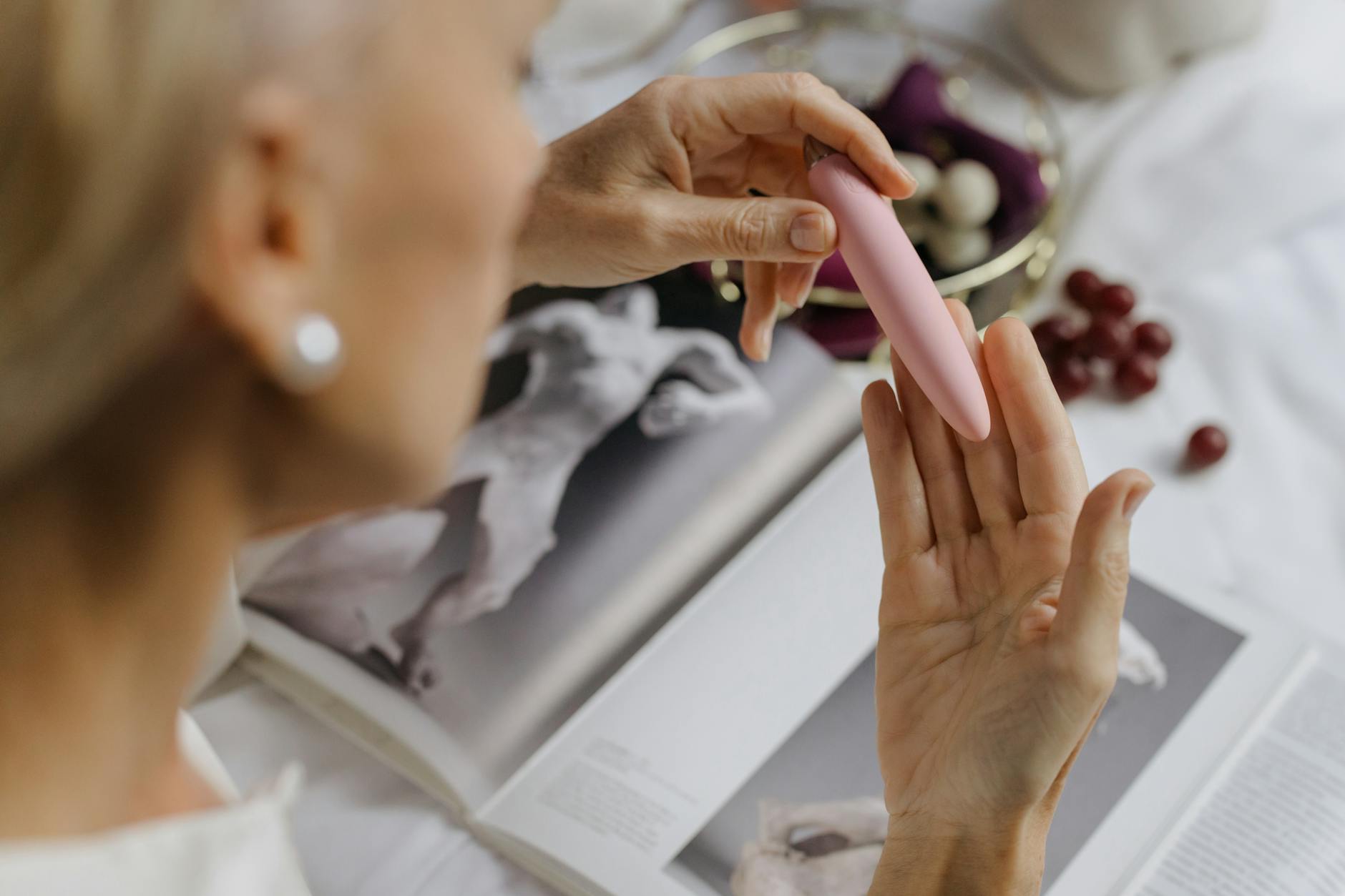
Let's talk about postpartum pleasure, honestly
Somebody should have told you this: having a baby does not end your sexual life. It pauses it, it changes the shape of it, and for a while, it feels impossibly far away. But it doesn't end it, and the fact that almost nobody frames it that way is kind of wild.
Here's what actually happens to your body after childbirth, when it's actually safe to restart intimacy, and why a lemon vibrator might be the gentlest, most effective way to rebuild sensation when you're ready.
What your postpartum body is actually dealing with
After childbirth, your pelvic floor is profoundly changed. Whether you had a vaginal delivery or a cesarean, your body spent nine months relaxing ligaments and stretching tissue to prepare for birth. That doesn't just snap back.
Vaginal deliveries cause visible trauma: tearing, swelling, hormonal shifts. Cesarean deliveries bypass the birth canal but create scar tissue and involve major abdominal surgery. Both require genuine healing time. Your pelvic floor is weaker, your tissues are still adjusting to hormonal shifts, and sensation is often dampened or genuinely absent.
On top of that, breastfeeding drops your estrogen levels significantly. Estrogen is what keeps your vaginal tissue plump, lubricated, and responsive. Without it, tissue thins, lubrication dries up, and sexual sensation can feel muted or uncomfortable. This is not weakness. This is your body healing.
When is it actually safe to restart?
Most healthcare providers clear patients for penetrative sex around six weeks postpartum, assuming no complications. That's the clinical guideline. Here's the real talk: clearance to have sex and readiness to enjoy sex are completely different things.
I tell clients to think of it in phases. Weeks one through three, your job is rest. Weeks four through six, gentle movement if you feel up to it. Around six to eight weeks, if bleeding has stopped and you're not in pain, solo exploration can begin. Partnered penetration often makes sense around three to four months, when pelvic floor function has genuinely started to return.
That timeline is not universal. Some people feel ready sooner. Many need longer. Both are completely normal.
Why lemon clitoral vibrators are so useful right now
A lemon vibrator, also called a lem vibrator, works differently than typical bullet or wand vibrators. Instead of direct friction, it uses gentle suction and pulsing patterns that stimulate the clitoral complex without the mechanical pressure that can feel painful on healing tissue.
The clitoris has over 8,000 nerve endings, and most of them are actually internal. A lemon sucker accesses those deeper nerves with gentleness. For postpartum bodies specifically, this matters because.
First, you can use it without entering the vagina at all. If you had tearing or an episiotomy, penetration might be painful for weeks or even months. A lem vibrator lets you rebuild sensation and pleasure in a way that skips that friction entirely.
Second, the graduated intensity levels on a quality lemon clitoral vibrator let you start at pattern one and stay there as long as you need. You're not choosing between "off" and "intense." You're choosing a rhythm that matches where your nervous system actually is right now.
How to start with a lemon vibrator postpartum
Three rules before you begin anything.
First, you need to be cleared by your healthcare provider. Not the six-week cultural norm. Your actual provider, given your specific delivery and recovery.
Second, you need to feel emotionally ready. Postpartum is chaotic. Sleep is gone. Your body feels like a rental car you don't recognize. Pleasure requires a minimum of mental space. If you're not there yet, that's okay. It will come back.
Third, you need privacy and time. Ten minutes alone is not a luxury. It's part of recovery.
When you're ready, start with the lem vibrator on the lowest pattern and lowest intensity. Somewhere quiet where you won't be interrupted. Lie down or sit in whatever position feels good. There is no rush. The entire point is slow rebuilding.
Many postpartum bodies find that sensation returns in layers. The first session might feel like nothing. The second might feel like a faint buzz. By the third or fourth, actual sensation starts waking up. This is normal neurological reactivation, not a sign that something is wrong.
Rebuilding sensation safely
Your clitoral sensitivity after childbirth is genuinely muted. This is not psychological. Hormones (especially dropping estrogen and prolactin elevation if you're breastfeeding) actually reduce nerve sensitivity. You're not broken. You're temporarily adjusted.
Here's what helps rebuild that sensation: consistency, patience, and the right tool. A lemon clitoral vibrator is designed for exactly this. The suction and pulse patterns re-engage your nervous system gently, without the pressure that can feel overwhelming or painful on recovering tissue.
I recommend four to five times per week if you can manage it. Sessions don't need to be long. Fifteen to twenty minutes is plenty. You're not trying to reach an orgasm on a deadline. You're slowly reminding your nervous system that pleasure still exists.
Orgasms might not arrive for weeks or even a few months, depending on delivery type and hormonal factors. That's normal. The goal right now is sensation, not performance. Once sensation returns consistently, orgasm usually follows naturally.
Partnered intimacy when you're ready
If you have a partner, this conversation needs to happen outside the bedroom. Postpartum bodies need different things. That's not sad. It's information. Your partner needs to know: penetration might not be possible yet. Sensation might be muted. You might need to stop mid-session. None of that means the intimacy isn't valuable.
Many couples find that using a lemon vibrator together during early postpartum recovery actually helps rebuild connection. Your partner can be present while you explore your own sensation. There's no performance pressure. There's no expectation that your body will respond the way it used to. You're learning each other's postpartum rhythms.
If your partner is anxious about resuming anything sexual, that's worth addressing directly. Postpartum anxiety about "going wrong" is really common. A therapist who specializes in postpartum dynamics can help you both work through it.
The emotional layer nobody mentions
Your body just did something wild. It grew a human. It healed from major trauma. It's now producing hormones that are telling it to nurture and protect rather than feel pleasure.
Some of the numbness you're experiencing is physical. Some of it is your nervous system saying, "Hey, let's focus on survival right now." That's not a sign that pleasure is gone forever. It's a sign that your body is temporarily organized around different priorities.
Rebirth of pleasure after childbirth often involves some grief. Grief for your pre-pregnancy body. Grief for the spontaneity you used to have. Grief for the version of sexuality that didn't involve time management and mental load. That grief is valid and also totally compatible with rebuilding new pleasure.
Many of my clients tell me that postpartum pleasure, when it returns, feels different in good ways. More intentional. Less about performance. More about genuine sensation and presence. That doesn't make the transition easier. But it's worth knowing that what's on the other side is often richer than what came before.
Red flags that need professional input
Pain during any sexual activity weeks after the six-week mark is worth flagging with your healthcare provider. Possible adhesions, scar tissue, or unhealed trauma might need attention. A pelvic floor physical therapist can often help when standard recovery hasn't progressed.
If arousal simply hasn't returned by three to four months postpartum and you're not exclusively breastfeeding, hormonal assessment is worth considering. Postpartum thyroiditis and other hormonal shifts can genuinely tank libido.
If you're struggling emotionally with the idea of sex or with your body, postpartum support is real and accessible. Postpartum depression and anxiety are common, treatable, and absolutely worth addressing. Therapy or medication or both can help you genuinely heal, not just physically but emotionally.
FAQ: Postpartum pleasure and lemon vibrators
Is it safe to use a lemon vibrator after vaginal tearing or an episiotomy?
Yes, as long as you're past the active bleeding and swelling phase. Usually around eight to ten weeks, depending on tear severity. The advantage of a lem vibrator is that you can use it externally without any vaginal contact, which makes it ideal for this recovery phase. If you're still in pain or unsure, ask your provider specifically about clitoral stimulation. Most will clear external play long before penetration is possible.
What if breastfeeding has completely killed my sex drive?
That's hormonal, not emotional. Prolactin and suppressed estrogen are brutal for libido. It usually improves when you reduce breastfeeding frequency or wean, but that's your timeline, not anyone else's. In the meantime, a lemon clitoral vibrator can help you access sensation even when desire feels absent. Sometimes rebuilding sensation actually helps desire return.
Can I use a lemon sexual toy if I had a cesarean delivery?
Absolutely. Cesarean patients often have an easier time with lemon vibrators because there's no vaginal trauma to navigate. You just need to be cleared by your provider and pain-free before starting. Usually around six to eight weeks if recovery is uncomplicated.
How long does postpartum numbness usually last?
Anywhere from a few weeks to six months, depending on hormones, delivery type, whether you're breastfeeding, and individual variation. Sensation typically returns gradually over three to four months for most people. Some people find it takes longer. Rebuilding sensation with a lem vibrator actually speeds up that neurological reactivation.
My partner is nervous about restarting anything sexual postpartum. Is that normal?
Completely. Partners are often anxious about hurting you or "going wrong." They might be sleep-deprived and also dealing with life changes. That anxiety is worth talking about directly, ideally with a therapist who specializes in postpartum couples dynamics. Many couples find that learning about postpartum recovery together actually strengthens their connection.
Can I use a lemon sucker if I'm exclusively breastfeeding?
Yes. Breastfeeding doesn't prevent pleasure, though it definitely tanks estrogen and sensation. A lemon vibrator can help rebuild clitoral response even while you're actively nursing. The gentle suction and pulsing patterns work with suppressed sensitivity rather than against it.
You're not supposed to just be a mom
Postpartum recovery gets framed as "getting your body back." That frame is limiting. You're not getting your pre-pregnancy body back. You're building a new one that includes everything that came before plus everything you just survived.
Pleasure is part of that recovery. Not right now, maybe. But soon. A lemon vibrator is one tool that makes that transition gentler. Your body deserves to feel good again. That's not selfish. That's restoration.
When you're ready to explore further, Hello Nancylem Shop is here. Our team understands postpartum recovery and can help you find exactly what you need. If you have questions, reach out to us at /contact.