
Let's name the thing nobody wants to talk about
Antidepressants and anti-anxiety medications are often necessary. They work. They help you breathe. And they can absolutely tank your sex drive. The irony is brutal: the medication that's keeping you stable is the same thing that's made desire feel like a distant, irrelevant memory.
Here's what I tell clients in my office: that flatness is a real symptom, not a personal failure. Your brain chemistry has shifted. Pleasure isn't gone. It's just harder to access. And that's where tools like the lemon clitoral vibrator can make a genuine difference.
How medication actually affects desire
Most SSRIs (selective serotonin reuptake inhibitors) work by increasing serotonin availability in the brain. That's fantastic for mood regulation. But serotonin is also involved in sexual response. Higher serotonin can dampen dopamine signaling in the reward pathways that fire up arousal. It's like turning down the volume on the system that makes you want sex in the first place.
Then there's the physical layer. Some medications can delay orgasm or make it harder to reach. Others reduce genital sensation. Some people report that their genitals feel numb or distant, like they're observing pleasure rather than experiencing it. This isn't hypochondria. It's real neuropharmacology.
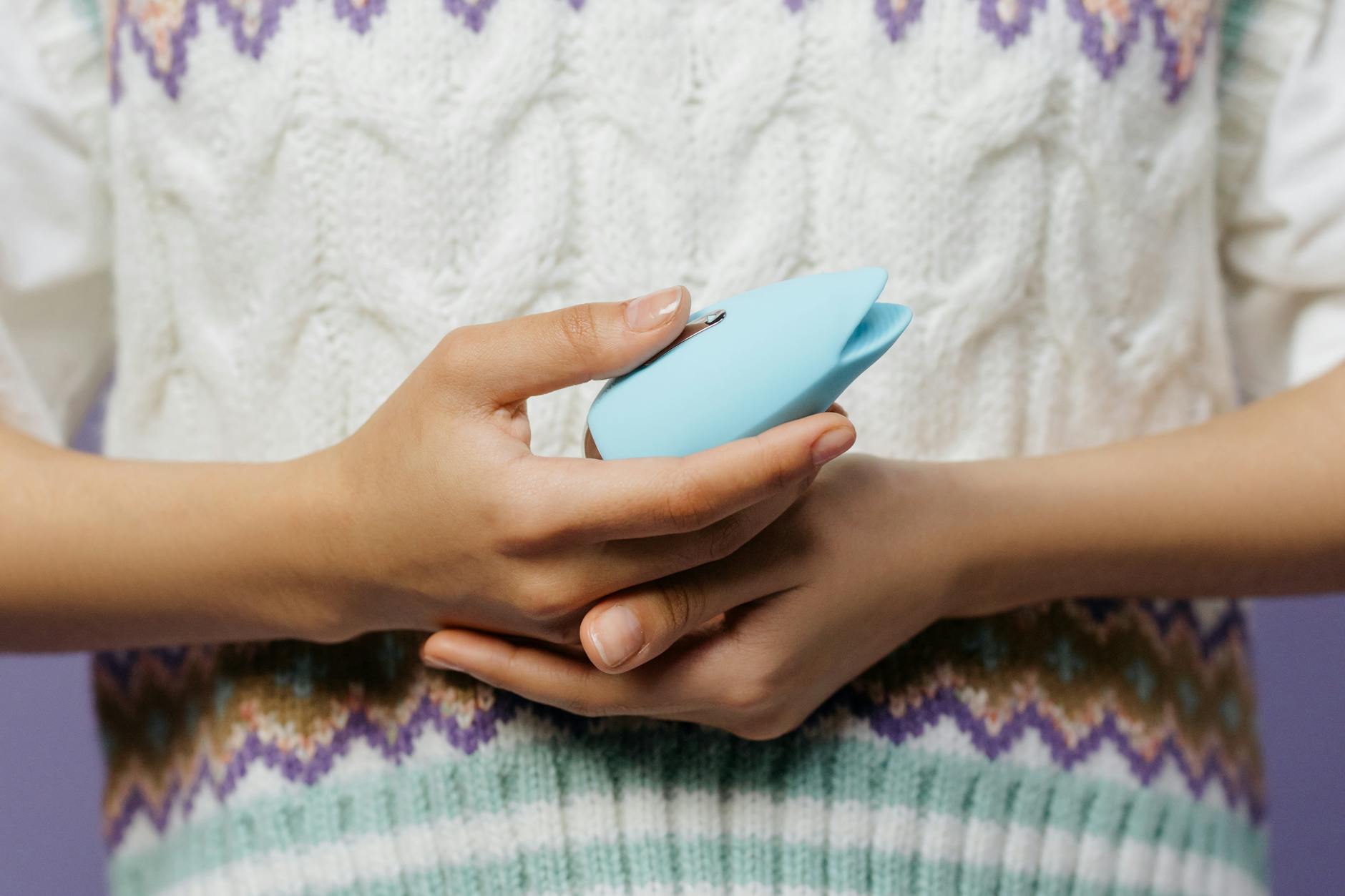
Photo by cottonbro studio on Pexels
Why lemon vibrators work differently for medicated bodies
A lemon clitoral vibrator (also called a lem vibrator or lemon sucker) works through air-pulsation technology, not vibration alone. That matters when your nervous system is already overstimulated or chemically muffled. Here's why.
Traditional vibrators deliver constant oscillation. If your sensation is already dulled by medication, you might need to crank the intensity to the point of discomfort just to feel anything. Air-pulsation works on the clitoris differently. The suction-and-release pattern mimics the rhythm of blood flow and nerve activation in a way that feels novel to a desensitized system.
Clinic observation: people using SSRIs often report that air-pulse lemon sexual toys feel less monotonous than traditional vibrators. The pattern variation keeps the nervous system engaged rather than adapting to flat, constant stimulation.
The practical steps to get started
First, let your partner know what you're doing and why, even if you're using the toy solo. Medication-induced reduced libido often hits harder when there's shame layered on top of it. Transparency removes one barrier. You're not failing at desire. You're creatively problem-solving.
Start with the lowest settings on your lem vibrator. Your goal here is not to reach climax. It's to establish connection and sensation. Spend 15 minutes just exploring, no orgasm target. Let your body wake up slowly. Patience is not optional when medication has muted your system.
Use water-based lubricant. Medications can also affect vaginal lubrication (thank you, serotonin). Lubrication isn't just comfort. It's also conductivity. Good lubrication helps the air-pulse sensation travel more effectively across the tissue.
Try this pattern: start at level 1 for three minutes. Move to level 2 for three minutes. Pause for one minute and notice what's happening in your body. That pause is crucial. It gives your nervous system time to register the stimulation rather than numb out to continuous input.
When to involve your partner
If you have a partner, this doesn't have to be a solo project. Many couples find that using a lemon clitoral vibrator together actually rebuilds intimacy that medication-induced reduced libido has eroded. Here's the difference between doing it solo and doing it together:
Solo use is about reclaiming your own pleasure and sensation. It's you and your nervous system getting reacquainted. Partner involvement is about reconnection and shared vulnerability. Your partner watches you explore. You explain what's working. They learn where and how to touch you differently. Over weeks, that knowledge deepens the sex you do have.
The lem vibrator becomes a bridge, not a replacement. You're not saying "I need this toy instead of you." You're saying "Let's use this tool to find our way back to each other." That narrative shift matters enormously in relationships.
Timing and medication rhythm
Here's something most people don't think about: some medications' sexual side effects peak at different times of day. SSRIs typically take 3-4 weeks to build up in your system and another 2-3 weeks for sexual side effects to fully manifest. But they also fluctuate.
Some people find their libido lifts slightly in the morning before they take their dose. Others notice it's flattest 2-3 hours after taking medication. Experiment with timing. If morning is your window of higher desire, use your lemon vibrator then. You're working with your neurobiology, not against it.
Also: alcohol can intensify sexual side effects of SSRIs. If you're on medication and drinking, your desire might feel even more absent. This doesn't mean you can't have alcohol. It means being aware that your window for pleasure might narrow further. Work around it.
The conversation with your prescriber
If your medication's sexual side effects are brutal enough that even tools like a lem vibrator aren't helping, that's information for your doctor. You have options. Some people do well switching to a different SSRI (Wellbutrin, for instance, has fewer sexual side effects). Others add a medication to counteract the sexual flattening. Some reduce their dose.
None of those conversations happen if you don't name the problem. Doctors expect this question. They're not going to shame you. Say it clearly: "My sex drive has completely disappeared since starting this medication. It's affecting my relationship and my sense of self. What are our options?"
The emotional piece is not separate
Reducing libido to chemistry alone misses half the picture. Yes, medication flattens desire. But the shame and frustration around that flatness also kills sex. People feel defective. Partners feel rejected. Couples stop trying.
Using a lemon sexual toy isn't just about rebuilding physical sensation. It's about reclaiming agency. You're saying, "My medication is doing its job keeping me stable, AND I'm not giving up on pleasure." That mindset shift often matters as much as the tool itself. You're refusing to accept flatness as permanent.
FAQ
Can lemon vibrators actually help if I feel completely numb down there?
Yes, but it takes consistency. Numbness from medication isn't permanent, but it does take time to wake up sensation. Expect 3-4 weeks of regular use before you notice real shifts. The air-pulse pattern in lemon clitoral vibrators is gentler on desensitized tissue than traditional vibrators, which is why they often work better for this specific problem.
Should I tell my partner I'm using a lemon vibrator if they don't know I'm struggling with libido?
That depends on your relationship dynamics. If you share a bed, transparency usually helps more than secrecy. If it's new information, frame it as you're doing it: "My medication has really affected my desire. I want to reconnect with my own pleasure. I might explore solo with a toy. I wanted you to know." Most partners respond better to honest communication than discovering it themselves.
Is it normal that medication side effects get worse over time?
Sometimes, yes. Your body can become more sensitized to side effects, or you might start noticing them more acutely as time passes. Other times, side effects plateau. If things are getting noticeably worse after months on the medication, check in with your prescriber. You're not stuck with this version of the drug forever.
What if my partner is also on medication that's killing their libido?
This is actually pretty common. Couples where both people are on SSRIs often hit a wall where desire just vanishes from the relationship. The silver lining is you both understand what's happening. You can problem-solve together. Lemon vibrators can help both of you reconnect solo first, then as a couple. Sometimes bringing pleasure back means starting separately and building toward togetherness again.
How long does it usually take for sensation to come back when using a vibrator consistently?
It varies, but expect the first noticeable shifts around 3-4 weeks of 2-3 times per week use. You might notice your body responds faster when you're not tired or stressed, which makes sense. Medications that flatten desire also make pleasure harder to access when your nervous system is already taxed. Better sleep and less stress genuinely help.
Can I use a lemon vibrator if I'm also in therapy for the emotional side of medication side effects?
Absolutely. In fact, they complement each other. Therapy addresses the emotional and relational pieces. Tools like the lem vibrator address the physical sensation piece. Together, they work. One without the other is incomplete.
The real bottom line
Your medication is not the enemy. Your body's flattened response is not a moral failing. And you don't have to choose between staying stable and having pleasure.
Lemon clitoral vibrators exist, in part, because people on psychiatric medications needed a tool that respected how their nervous systems actually work after chemical shifts. Using one isn't defeat. It's you staying committed to yourself during a season when commitment feels harder.
Start small. Be patient. The sensation will come back. Your pleasure matters even (especially) when medication is part of your life. If you want to talk through what approach might work for your specific situation, we're here to help.
Get in touch with any questions about how to choose the right lemon sucker for your body and needs.