Here's what nobody tells you about touch aversion
Touch aversion isn't a rejection of you. It's not about intimacy being bad or your partner not wanting closeness. It's sensory data hitting the nervous system differently. The skin registers pressure or texture and sends "threat" signals to the brain before pleasure has a chance to register. Autism, ADHD, trauma, chronic pain, and some anxiety conditions all create real neurological reasons why certain kinds of touch feel overwhelming rather than connecting.
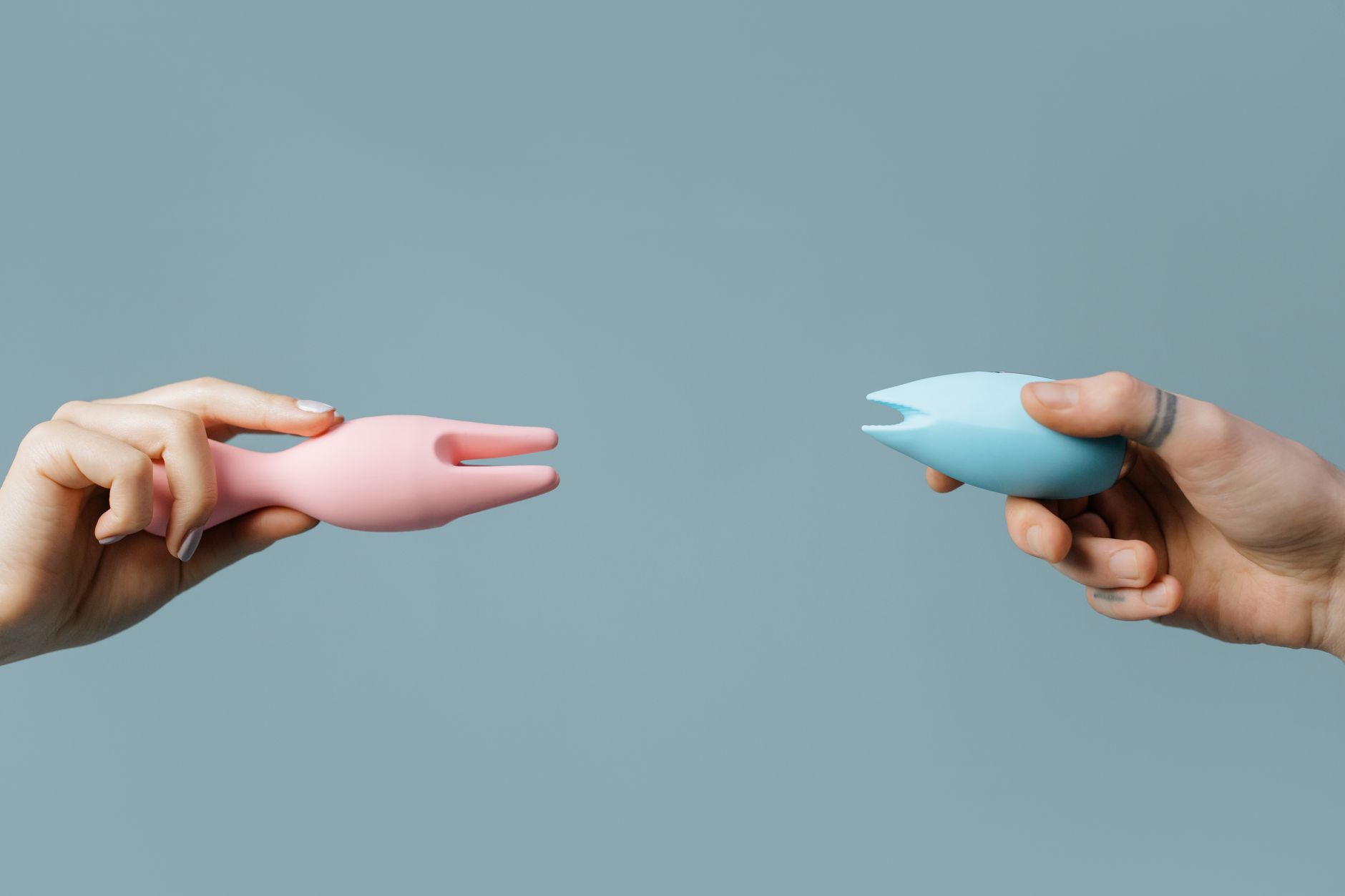
The good news: pleasure doesn't require traditional touch. Lemon vibrators and other air-suction toys create stimulation without the prolonged skin-to-skin contact that often triggers aversion. The sensation is localized, predictable, and entirely under your partner's control.
Why lemon clitoral vibrators work differently for sensory-sensitive partners
Most vibrators rely on direct mechanical pressure against tissue. That works for many people but creates sensory overload for others. The constant buzzing, the sustained pressure, the unpredictable micro-movements all add up to too much input.
Lem-style lemon vibrators use air-pulse suction instead. The sensation is gentler, more diffuse, and easier to tolerate because it doesn't create the same intensity of skin stimulation. The pulse pattern is rhythmic and predictable, which is calming for nervous systems that need to anticipate sensation rather than be surprised by it.
For partners with touch aversion specifically, the suction approach creates distance between the toy and your partner's body. There's less direct pressure, fewer unpredictable vibrations, and more control over intensity. You can start at the lowest setting and adjust from there based on real-time feedback.
Communication first. Always.
Before any toy enters the picture, you need to know exactly what your partner's aversion feels like. Is it all touch, or specific types (pressure, texture, temperature, duration)? Does it change depending on stress levels, time of day, or whether your partner initiated or was surprised? Is there a sensory threshold where things feel okay up to a point, then unbearable?
This isn't clinical interrogation. It's "What does this feel like to you?" and "What would help?" asked when you're both calm and clothed. Write down the answers. Refer back to them.
Also ask: "Is there a time when touch feels better?" Many people with sensory sensitivities have windows where their nervous system is more regulated. Maybe it's right after exercise. Maybe it's midday rather than evening. Maybe it's when they've had caffeine or when they haven't. These patterns matter because they affect what's possible on any given day.
Setting the physical environment
Sensory sensitivity extends beyond touch. Reduce competing input.
Lighting. If your partner is sound-sensitive or light-sensitive, dim the room or use a specific type of light they've told you feels manageable. Harsh overhead lights spike nervous system activation for many neurodiverse people.
Sound. Some people do better with background noise that masks other sounds; others need complete silence. Ask. Use noise-cancelling headphones if needed.
Temperature. A room that's too warm or too cold increases overall sensory load. Aim for comfort. If your partner gets cold during intimacy, a blanket nearby helps without adding unpredictable touch.
Fabrics. If your partner wears clothes during, choose loose, soft fabrics. Tight clothing increases tactile input and can make sensory regulation harder.
Introducing the lemon clitoral vibrator
Don't assume your partner should use it the same way you would. Start with conversation.
"I found a toy that works differently from traditional vibrators. It uses suction instead of buzzing. Would you be interested in trying it?"
If yes, show them the toy before you use it. Let them hold it, see the settings, understand what it looks like and feels like in their hand. No surprises.
Turn it on at the lowest setting so they can hear and feel what the vibration level is like. Some people need to acclimate to the sound before the sensation makes sense.
When you do use it, communicate every step. "I'm moving it now." "I'm turning it up one level." Narration sounds awkward initially but it eliminates the startle response that derails arousal for sensory-sensitive people.
Building pleasure without traditional foreplay
Your partner might not enjoy prolonged kissing, body massage, or hand contact. That's okay. Pleasure architecture looks different.
Consider solo stimulation while your partner is present but doesn't have to engage in touch. Many couples find that this removes pressure and allows both people to feel pleasure simultaneously without negotiating constant tactile contact.
Some partners do well with "sides" intimacy, where you're close but not overlapping. You could use a lemon vibrator on yourself while your partner uses one. You experience pleasure, presence, and the comfort of being together without forced contact.
Others enjoy verbal connection during solo or couple's use. Talking about sensation, desire, and what feels good creates intimacy without adding tactile demand.
The Lem vibrator at the lower settings can also work as a bridge. Your partner might tolerate a few minutes of suction stimulation that they wouldn't tolerate with hands or mouth. Start there. The goal isn't "fix the aversion." It's "find what actually works for this person."
When arousal is hard to build
Sensory aversion sometimes travels with other challenges: low desire, difficulty with orgasm, or struggle to access arousal even when stimulation feels okay physically.
This is where patience and time matter. Don't rush. Your partner doesn't need to reach orgasm for intimacy to count. Pleasure exists on a spectrum. Even a moment of comfort with sensation is progress.
Lower your expectations deliberately. If a 15-minute session where your partner tries the lemon vibrator and feels okay is the goal, that's enough. Success isn't intensity. It's consent, comfort, and showing up.
Handling the hard moments
Your partner will have days when even the lowest setting feels like too much. Or they'll be fine with stimulation but their brain won't cooperate with arousal. This isn't failure.
The conversation around this matters enormously. "Your system said no today, and that's valid" is different from "We'll try again next time," which carries subtle pressure. One is acceptance. The other hints that this is a problem to solve.
Also: don't take sensory aversion personally. When your partner's nervous system says "no more touch," that's not a comment about you or your desirability. It's literally sensory processing. Separate the two conversations in your head before you show up in the bedroom.
Creating the right support around pleasure
If your partner is neurodivergent or has trauma, they might benefit from working with a sex-positive therapist who understands sensory processing. This isn't because something is wrong. It's because professional support can help both of you understand the landscape better.
You might also consider reading together about sensory sensitivity and sexuality. Knowledge reduces shame and helps your partner feel less alone. "This is how my nervous system works" is clearer than "I don't know why I can't just relax."
The role of trust and predictability
For sensory-sensitive people, predictability is arousing. It sounds counterintuitive until you realize that a nervous system constantly scanning for threat can't access pleasure. When you signal "here's what's about to happen, here's what I'm doing, here's how you can stop," your partner's brain can finally quiet down.
Use the same toy the same way initially. Different toys, different pressures, new surprises come later, if at all. Consistency creates safety. Safety creates the conditions for arousal.
As your partner's comfort grows, introduce variety slowly. Always ask first. Always narrate. Always check in. Boring? Maybe. But boring is the foundation of security, and security is the foundation of pleasure for people with touch aversion.
When to seek additional support
If sensory aversion is paired with pain during or after intimate contact, see a pelvic floor physical therapist. Sometimes aversion and pain live together, and addressing one helps the other.
If your partner struggles with arousal across contexts (not just with you, but solo too), a sex therapist can help identify whether it's sensory, hormonal, psychological, or some mix.
If you're feeling resentful or stuck in the negotiation around touch, couples therapy gives you both tools to communicate about unmet needs without blame. This stuff is complex. Professional support is part of the answer.
The bigger picture
Using a lemon vibrator with a sensory-sensitive partner isn't a workaround for a broken system. It's a legitimate way to create pleasure that respects how your partner's nervous system actually works. That's not settling. That's intimacy designed around reality rather than fantasy.
Your partner deserves pleasure without coercion or overwhelm. You deserve intimacy that doesn't require convincing your partner to endure sensation that feels threatening to them. Lemon clitoral vibrators bridge that gap by offering stimulation that's intense enough to create arousal but predictable enough to feel safe.
Start small. Communicate constantly. Adjust based on what you learn. This kind of partnership takes attention, but the payoff is intimacy built on actual consent rather than negotiated compromise.