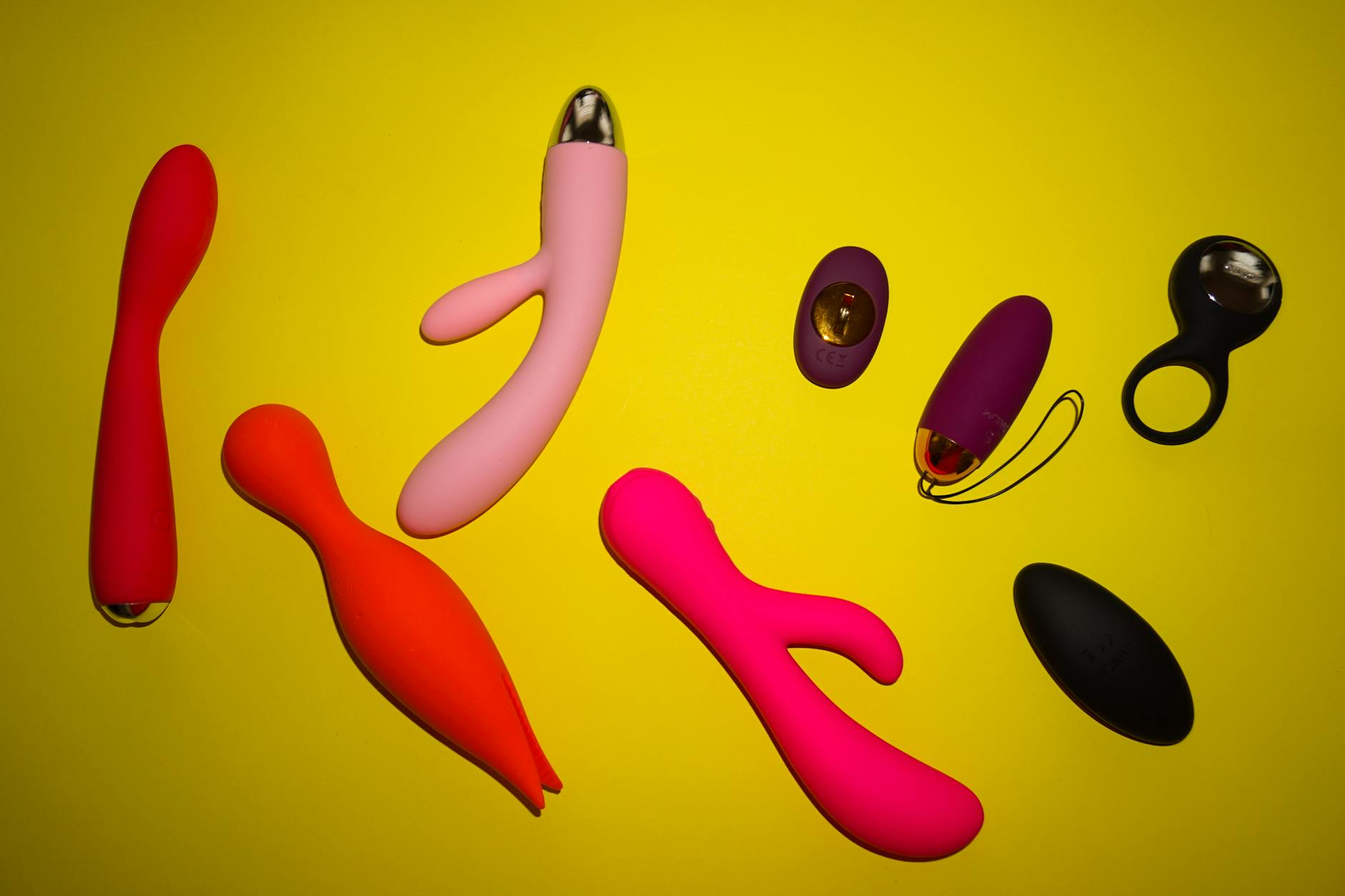
Let's start with the real conflict
You're in a relationship. You want to explore your pleasure solo, with a lemon clitoral vibrator or any toy that works for you. And somehow, despite nobody saying it out loud, it feels like a betrayal. Like you're doing something behind your partner's back, or worse, like you're saying "you're not enough." So you don't do it. You wait for your partner to be in the mood. You perform satisfaction. You leave that part of yourself locked away.
This is the exact opposite of what actually builds intimacy.
Why solo pleasure with a partner matters more than you think
Here's what the research on couples actually shows: people who have their own sexual autonomy, who know their own pleasure without needing a partner to deliver it, tend to be happier and more satisfied in relationships. Not less. It's counterintuitive, but it's consistent.
Why? Because you're not entering intimacy from a place of lack. You're not desperate for someone else to make you feel good. You know what you like. You've spent time with yourself. You show up to partnered sex as a complete person, not someone waiting to be completed.
For people with vulvas especially, this matters wildly. So many of us learned that our pleasure is something a partner gives us, not something we own. Solo exploration breaks that pattern. It tells your nervous system: "Your pleasure is yours first. Everything else is a bonus."
The practical case for a lemon vibrator when you have a partner
A lemon sucker or other clitoral vibrator is perfect for solo time specifically because of how it works. Air-suction technology stimulates broadly, doesn't require you to be in any particular position, and honestly? It's weirdly discreet compared to other options. You can use it quickly if you need to. You can use it slowly if you have time. It adjusts to you.
Comparison: if you're waiting around for a partner to be available and interested, you're left with manual options or toys that require more prep. A lemon vibrator takes literally one minute. It's the adult toy equivalent of a quick stretch when your body needs it. Low friction, high efficiency.
Having the conversation with your partner (the thing everyone dreads)
Honestly though, this is where the real work happens. Not with the toy. With the words.
The conversation doesn't need to be a Big Talk. It's actually better if it isn't. Here's a shape that works:
"I've been thinking about exploring solo pleasure more. This isn't about you or us. It's about me knowing my own body better, which actually makes intimacy with you better. I wanted to tell you directly instead of hiding it." That's it. You're not asking for permission. You're not apologizing. You're stating a fact about your own autonomy.
If your partner panics, that's worth understanding. Sometimes people worry solo pleasure means you're pulling away emotionally. Sometimes they think it's a judgment on their performance. Sometimes they've absorbed the same shame you're trying to unpack. But that's their nervous system, not your responsibility to manage. You can be kind and clear at the same time.
If your partner is supportive? You'll know it because they'll ask questions without judgment. They might even be curious. Some partners find it genuinely hot. Others just accept it as normal. All of those are fine.
What's not fine: hiding it. Shame-based secrecy erodes intimacy far more than explicit solo pleasure ever could.
Where to do it and when
Timing matters more than you'd think, especially early on. The worst setup is waiting until your partner is asleep in bed next to you. That's when it feels most like a secret, most like betrayal.
Better: when you have genuine privacy. A shower. Your lunch break at work. An afternoon when your partner is out. The key is that you're not stealing time. You're taking intentional time that's yours.
As for frequency: there's no rule. Some people use a lemon vibrator solo twice a month. Some use it twice a week. The point isn't regularity. It's that it's available to you without negotiation or timing around someone else's mood.
What makes a lemon clitoral vibrator ideal for this specifically
A few things converge:
Speed of access. You don't need to warm up your partner. You don't need to create an entire scene. A lemon vibrator is genuinely fast. Fifteen minutes if you want it, five if you're efficient. That means you're more likely to actually do it instead of talking yourself out of it.
Consistency. It delivers the exact same sensation every time. You know exactly what you're getting. That removes a variable when you're learning your own body. You can focus on what feels good instead of managing someone else's technique or energy.
Simplicity. No negotiation. No performance. No checking in. Just you and a tool designed specifically for pleasure. That removes so much cognitive load from the experience.
If you haven't used lemon sexual toys before, they're worth trying specifically because the suction sensation is different from vibration. It feels less intense on sensitive tissue, but somehow more concentrated. Many people find it easier to orgasm with suction alone than with traditional vibration, especially if they have pelvic floor tension or if direct contact feels too sharp.
The emotional piece: what solo pleasure actually tells your partner
Here's what I've seen in my practice over decades of working with couples: when one partner starts exploring solo pleasure openly, it often creates space for the other person to do the same. It normalizes the idea that sexual autonomy isn't a threat to the relationship. It's a foundation for it.
Some partners even want to join eventually. Not in a way that makes it about them, but in a way that's genuinely curious about your pleasure. That's beautiful when it happens. But it's not the point. The point is that you have access to your own body independently.
Your partner's job isn't to be your only source of pleasure. Their job is to be present when you're together and respectful when you're not.
What changes when you own this
Over time, a few things shift. You stop performing in partnered sex. You know what actually works for you, so you can ask for it clearly. You show up with more confidence. You have less resentment because you're not waiting around for someone to give you something you could give yourself.
And honestly? Most partners find confidence and self-knowledge wildly attractive. It's the opposite of desperate. It's the opposite of shame.
A note on frequency and your relationship
If you're using a lemon vibrator solo constantly while avoiding partnered intimacy, that's worth examining. But that's different than solo pleasure being the issue. That's usually a signal that something else needs attention in the relationship.
If you're having regular partnered sex and also exploring solo? That's healthy. That's normal. That's you having a full internal life alongside your relational life.
Think of it this way: you also have friendships, hobbies, and thoughts that exist outside your relationship. Solo pleasure is in the same category. It's not in competition with your partner. It's part of being a whole person.
Common worries, actually addressed
"Won't it make me less interested in partnered sex?" No. Usually the opposite. When you know what you like, you want to share that. When you're not deprived, you're more interested, not less.
"If I tell them, will they feel threatened?" Some do initially. But honesty builds trust over time. Secrecy corrodes it.
"Is it weird to use a lemon clitoral vibrator when I have a partner?" Genuinely no. Millions of people in relationships use toys. It's normal. The weird part is the shame, not the toy.
"What if my partner says no?" Then you have a relationship dynamic to understand. Are they controlling? Are they insecure? Are they operating from a different sexual script than you? Those are big questions worth asking. But they're not questions about whether solo pleasure is wrong. They're questions about whether the relationship is working.
The bottom line
You deserve access to your own pleasure independent of someone else's availability, interest, or performance. That's not a nice-to-have. That's fundamental. A lemon vibrator, a lemon sexual toy, any clitoral vibrator that works for you. these are tools for that autonomy.
Using them doesn't make you a bad partner. It makes you someone who respects yourself. And ironically, that's what actually makes you a better partner.
People also ask
How often is it normal to use a lemon vibrator solo when you're in a relationship?
There's no normal. Some people never do. Some do weekly. What matters is that it's intentional and honest. If you're using it daily to avoid your partner, that's a relational issue. If you're using it weekly because it feels good and you've talked about it, that's self-care. The frequency isn't the variable. The presence or absence of shame and secrecy is.
Will my partner think I'm cheating if I use a lemon clitoral vibrator alone?
Only if you frame it as a secret. If you're open about it from the start, most partners understand it as self-care, not infidelity. Infidelity involves betrayal and deception. Solo pleasure with full transparency is neither. If your partner equates the two, that's a deeper conversation about trust and control worth having with a couples therapist.
Should I tell my partner before or after I start using a lemon sexual toy?
Before is cleaner. It removes the shame that comes with being discovered. It also shows you're not trying to hide anything. But if you've already been using one and haven't mentioned it, you can still bring it up now. "I've actually been exploring solo pleasure, and I should have told you. Here's why I want to." Honesty now is better than deception discovered later.
Can using a lemon vibrator alone hurt my relationship?
Not if it's part of a healthy dynamic where you're also present for partnered intimacy and you've been honest about it. It can hurt a relationship if you're using it to avoid connection, or if you're being dishonest about it. The toy isn't the problem. The shame or secrecy is.
Is it different using a lemon vibrator solo versus with a partner watching?
Completely different energetically. Solo is about self-discovery and self-pleasure. With a partner present, even if they're not touching you, it becomes a shared experience. Some people love that. Some find it harder to relax. Both are valid. You can explore both and see what feels right for you.
What if I feel guilty about solo pleasure even after telling my partner?
That guilt probably isn't about your partner. That's internalized shame about pleasure itself, usually learned early. A therapist can help you unpack that. But knowing it's there is the first step. You're not guilty for wanting pleasure. You're just carrying old programming.