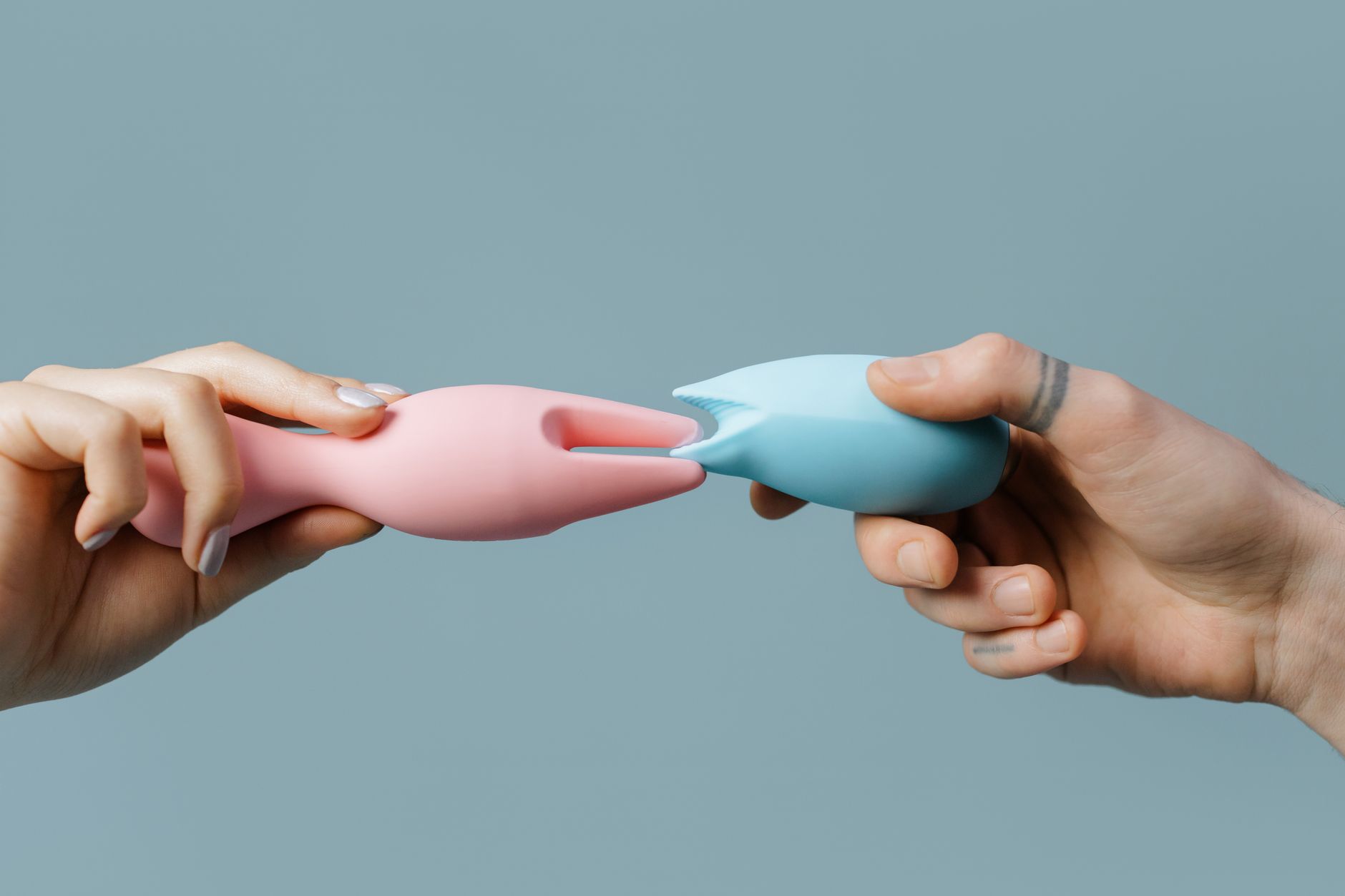
Here's the thing about foreplay and clitoral vibrators
Most couples never talk about it. One person brings it up, the other assumes it means something about them. Then nobody mentions it again for two years, and the vibrator lives in a drawer collecting dust. Which is a shame, because lemon vibrators and clitoral vibrators in general can genuinely transform foreplay when you know how to use them with a partner.
The key is treating it like a conversation, not a surprise.
What changes when you add vibration to foreplay
Foreplay without a vibrator is an arc. Hands, touch, maybe oral sex. Built-in pacing, natural peaks and valleys. Add a lemon clitoral vibrator and you're adding a tool that accelerates stimulation and can reach sensations that hands alone can't. For many people, that's the difference between orgasming during foreplay and not.
Here's what actually happens physiologically. Vibration stimulates nerve endings in dense clusters around the clitoris. The frequency and intensity of a lemon sucker or traditional vibrator creates a chain reaction in the nervous system that builds arousal faster and sometimes more intensely. Your partner's touch doesn't stop being important. It becomes one layer in a fuller experience.
The emotional part matters equally. When a partner actively participates in using a vibrator instead of checking out, it signals that your pleasure is shared work, not your solo problem.
Before you introduce it: the conversation that actually works
Don't ask "Is it okay if I use a vibrator?" That sounds like you're asking permission to do something suspect. Instead, lead with curiosity and honesty.
Try: "I've been thinking about trying a lemon vibrator during foreplay. I think it might feel really good, and I want to experience it with you. Would you be interested in trying that together?"
That works because it centers pleasure (yours and theirs) instead of anxiety. You're not asking them to accept a replacement. You're inviting them to collaborate on something new.
Their answer might be "Yes, I'm curious," or "Not right now," or "Tell me more." Any of those is workable. What you're listening for is whether they feel threatened. If they do, that's not a vibrator problem. That's a trust or insecurity conversation that needs to happen separately.
How to actually integrate it into foreplay
Timing matters. Start with lemon vibrators and clitoral vibrators after foreplay has already begun, not at the opening. Let your partner touch you first. Build arousal through oral sex, hands, whatever your usual flow is. Once you're already in the zone together, that's when a vibrator feels like an escalation, not a replacement.
Here's a rhythm that works:
Your partner uses hands or mouth for 5-10 minutes. Then say something like, "I want to try the vibrator now." They can hold it, you can hold it. You can turn it on low while their fingers are still inside you. You can use it while they're touching you elsewhere.
The point is integration, not substitution. If it feels like you've sidelined them, you've introduced it wrong.
Intensity levels and what your partner should know
Most lemon clitoral vibrators come with settings. Start at pattern 1 or 2, not maximum. This gives you both time to adjust and lets you see how your body responds. A partner who watches you discover new sensations is a partner who becomes invested in your pleasure. A partner who just watches you go solo often feels excluded.
Talk them through what you're feeling. "That's good." "A bit higher." "Stay there." This isn't for their ego. It's functional feedback and it keeps them present.
Many people worry that vibrators mean their partner's hands aren't enough. That's only true if you treat them that way. If you frame it as "I want to feel this new sensation with you," the vibrator becomes about expansion, not inadequacy.
What to do if they seem uncomfortable
You might feel them tense. Their touch might change. They might get quiet. That's usually not about the vibrator itself. It's about feeling replaced, or worried about what the vibrator means about their performance, or uncomfortable with the shift in control.
Address it directly but gently. Pause. "You okay?" Listen without defending. Then ask what would help them feel better. Maybe they want to hold the vibrator and control it. Maybe they want to use it on you while they're inside you. Maybe they need to hear that this doesn't change how you feel about their touch.
Rarely, someone will say they're genuinely uncomfortable with vibrators. That's fine. You can decide what you need and what compromises you're both willing to make. But that's a different conversation.
The surprising part: when partners take ownership
Something shifts when a partner stops viewing the vibrator as something you do to yourself and starts viewing it as a tool in shared pleasure. Suddenly they're curious about settings, about what feels good, about watching your body respond. Many of my clients report that their partner becomes more interested in their pleasure overall, not less.
That's because when you name pleasure as something worth investing time and creativity in, the relationship changes. It says: this matters, and we both matter.
If you're using a lemon vibrator like the Lem, the suction pattern creates a different kind of stimulation than traditional vibration. Some partners find it interesting to alternate between hands, between oral, between the vibrator. Foreplay becomes about variation and discovery instead of a fixed sequence.
The practical stuff nobody mentions
Use lube. Not because anything is wrong, but because lube makes everything feel better and lets the vibrator glide smoothly. Have it nearby. Make sure the vibrator is charged. Dim the lights if that helps you relax. These tiny logistical things are the difference between "this feels awkward" and "this feels sexy."
Wash the vibrator before and after. Tell your partner you're doing this so they're not confused. It's routine maintenance, not a comment on cleanliness. Most clitoral vibrators are waterproof or water-resistant, so a quick rinse under warm water is fine.
If you're using a vibrator with a partner regularly, talk about where it lives. In a bedside drawer, not hidden. Visible normalcy helps. If they see the lemon vibrator on the nightstand, it becomes part of your sexual routine instead of a secret.
When foreplay feels different because of the vibrator
You might find that your arousal builds faster. Your orgasms might feel different. You might want more foreplay, not less. Tell your partner these things. Say: "That felt incredible. I felt that differently than before." Not as praise or comparison. As data about what works.
Partners who are genuinely interested in your pleasure want that feedback. It helps them understand your body better. It makes the sex better for both of you.
There's also a chance that using a vibrator during foreplay with a partner changes what you want solo. You might crave the vibrator more after you've felt it with them present. That's normal. Your body is learning new pathways. Follow that curiosity.
When to bring it back to their touch
Foreplay with a vibrator doesn't mean you stop using your hands and mouth. It means you layer them. Use the vibrator for 5-10 minutes, then switch back to fingers. Combine them. Have your partner use the vibrator while they're also touching you elsewhere. Mix it up.
Many people worry they'll "get used to" the vibrator and not enjoy other types of touch. That's not how sensation works. Your body doesn't reject touch because it's experienced vibration. It just knows what it enjoys. If a vibrator during foreplay with your partner feels good, use it. Your hand and their hands will still feel good too.
The whole point is that you deserve multiple kinds of pleasure. Lemon clitoral vibrators don't take anything away. They add options.
FAQ: Partnered Foreplay and Clitoral Vibrators
Does using a vibrator during foreplay mean my partner isn't satisfying me?
No. It means you want to experience different sensations during sex. Some people enjoy both oral sex and penetration equally. Some people enjoy both their partner's hands and vibration equally. These aren't either-or choices. They're layers of pleasure. A partner who gets defensive about a vibrator is often dealing with their own insecurity, not an actual problem with the sex you're having.
How do I know if my partner is uncomfortable but won't say it?
Watch for changes in their touch, withdrawal, or silence. The responsible move is to ask directly and create space for honesty. "I noticed you got quieter. What's going on?" Then actually listen. Sometimes discomfort is about the vibrator itself. Sometimes it's about feeling like you don't need them, which is a connection conversation, not a sex conversation.
Can we use a vibrator during foreplay without it leading to sex?
Completely. Foreplay is its own complete experience. You can use a lemon vibrator, have an orgasm from it during foreplay, and then decide whether you want penetration or not. Your pleasure isn't a stepping stone to sex with a partner. It's the main event. Treat it that way.
What if I orgasm from the vibrator but my partner hasn't come yet?
Keep going with your partner if you want to. Or rest and let them take what they need next. There's no rule that says you both have to finish at the same time. This is actually where many couples get stuck. Build flexibility into your expectations. Some sessions are about her, some are about him, some are about both, some are about just being together without orgasm as the goal.
Should I hide the vibrator when we're not using it?
No. Hiding it suggests shame, and shame is the enemy of good sex. Keep it in a bedside drawer or a dedicated spot. Visibility normalizes it. If your partner sees the lemon vibrator as just another part of your sexual toolkit, they're less likely to feel threatened by it.
What's the best way to ask a partner to help hold or control the vibrator?
Be direct. "I'd love for you to hold this while I'm on top of you" or "Can you use this on me while you're inside me?" This isn't a negotiation. It's an invitation. If they're not comfortable, you move to your next option. But most partners find that participating actively in using a vibrator feels better than watching from a distance.
The thing about pleasure and partnership
Integrating a lemon vibrator into foreplay with your partner is ultimately about saying that pleasure is a shared project, not something you do alone and they tolerate. It requires communication, trust, and willingness to try new things. Not every couple will want to. That's fine. But for couples who do, it often deepens both the sex and the intimacy.
Start with conversation. Layer the vibrator into foreplay instead of replacing it. Pay attention to how your partner responds and adjust. And remember that your pleasure matters. Not as a nice bonus. As something worth investing time and care in.
If you're ready to explore this, check out our guide to finding the right vibrator for your body, or read about how to navigate using clitoral vibrators without awkwardness. And if you have questions about bringing this up with your partner, our contact page is always here.