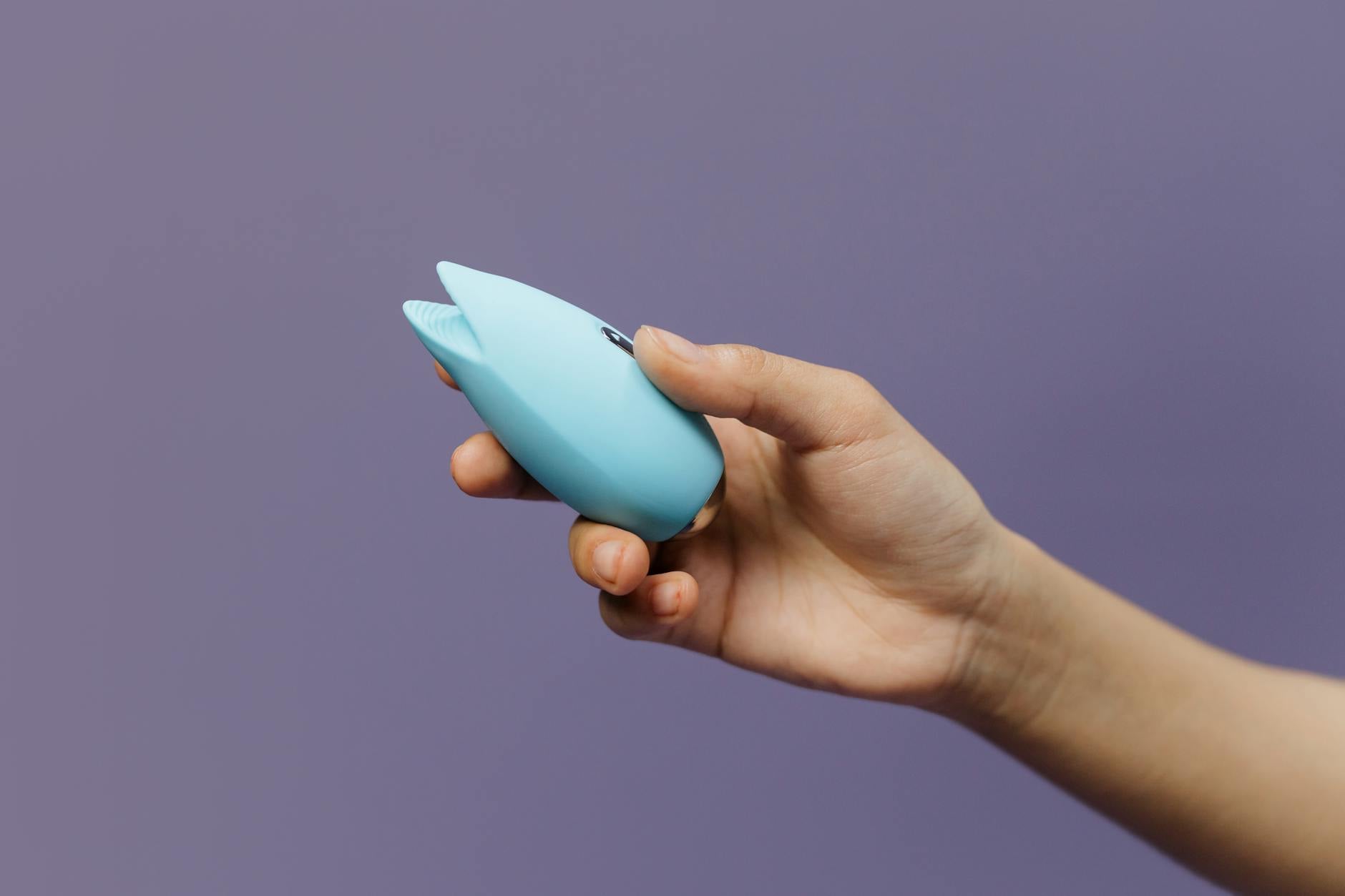
How to Use Lemon Vibrators When You Feel Self-Conscious About Pleasure With a Partner
Here's what happens when shame shows up in the bedroom: your nervous system goes into low-grade alert mode. You're watching yourself, judging yourself, monitoring your partner's reaction. Everything tightens. Arousal stalls. The harder you try to relax, the more self-aware you become. It's a loop, and it's exhausting.
You're not broken. You're just caught in a pattern where vulnerability and pleasure have gotten tangled up with fear. The good news is that a lemon clitoral vibrator can help you interrupt that pattern—not by magicking away the shame, but by giving you something to focus on besides your own doubt.
What self-consciousness actually does to your body
When you're worried about how you look, how you sound, whether you're taking too long, or whether your partner is enjoying this, your brain is in performance mode. That's the opposite of arousal mode. Performance mode triggers your sympathetic nervous system (fight or flight). Arousal needs your parasympathetic nervous system (rest and digest) to be in charge.
Think of it this way: you can't be simultaneously worried about your thighs and dissolved into pleasure. Your nervous system won't let you occupy both states at once. One shuts down the other.
When you add self-doubt to this, something specific happens. You start monitoring sensations instead of feeling them. You're looking for proof that this is working, that you're responding correctly, that your body is cooperating. That monitoring is the enemy of presence.
Why lemon vibrators interrupt the self-consciousness loop
A lemon clitoral vibrator like the Lem is designed to deliver consistent, reliable stimulation through suction rather than vibration alone. Here's why that matters when shame is in the picture: suction creates a focal point. Your attention has to go somewhere, and suction gives it a reason to go toward sensation instead of away from it.
When you're using a lemon clitoral vibrator, your nervous system gets a clear, physical signal: this is pleasurable, and it's happening now. Not "am I feeling this correctly?" but "this is working." That's different from traditional vibration, which can feel more diffuse and easier to dismiss if you're already doubtful.
Second, toys create distance from performance. There's something between you and direct contact, which paradoxically can make it easier to relax. You're not managing your facial expressions or your breathing in the same way. The toy is doing something, and your job is just to let it.
Third, using a lemon sucker during partner sex shifts the dynamic from "does my partner find me attractive enough" to "my partner is actively choosing to include something that makes me feel good." That's collaborative. That's about both of you working together toward pleasure instead of you trying to perform the right version of arousal.
How to introduce this without more shame
The conversation matters more than the toy.
Don't lead with "I have body image issues" or "I feel weird about my body." Lead with what you actually want: "I want to feel more present when we're together. I get a little in my head, and I want to try something that helps me focus on sensation instead of my own thoughts."
That's honest without inviting your partner to reassure you that your thighs are fine. Reassurance doesn't work. It actually reinforces the shame because it implies there's a real thing to be reassured about.
Instead, frame it as an enhancement to mutual pleasure. "I've been reading about how lemon clitoral vibrators change sensation, and I think using one together might help me relax more. I want to try it." You're not asking for permission. You're announcing an experiment.
If your partner has a reaction (resistance, surprise, insecurity), that's information. You can sit with that separately from the toy introduction. But most partners respond well to clarity about what you actually want.
Practical setup for partnered use
Start solo first, even if you feel silly about it. Twenty minutes of using your lemon vibrator alone gives you three things: a sense of what intensity settings actually feel good (not what you think should feel good), comfort with the sensation profile, and proof that this helps you stay present. That matters because when you're less self-conscious solo, you'll bring that ease into partner sex.
When you're ready to use it with your partner, the logistics matter:
Position yourself so you can reach it comfortably. Lying on your back or side, or sitting propped up. Your partner can initiate other touch—hands, mouth, inside stimulation—while you control the vibrator. This keeps you in the active role of managing your own pleasure, which reduces the feeling of being watched.
Start with a lower setting and explore the whole range. It's easy to assume you want the highest intensity, but lemon clitoral vibrators often work better when you're not maximally stimulated. The suction is subtle; you can feel everything else happening at the same time.
If you feel self-consciousness creeping back in, that's normal. Your brain wants to return to familiar patterns. The antidote isn't to white-knuckle your way into relaxation. It's to gently redirect: "I'm noticing I'm thinking about myself. Let me focus back on this sensation."
The confidence that comes after
Using a lemon sucker during partnered sex, over time, rewires something. You start to accumulate evidence that pleasure is accessible, that your body cooperates, that vulnerability with your partner is safe. Not because your partner tells you so, but because you've experienced it.
That evidence is what dismantles shame. Not talk. Experience.
After a few times of successfully being present, using clitoral vibrators during partner sex, you often find yourself reaching for toys less. Not because they didn't work, but because you've proven to your nervous system that partnered pleasure is possible. The shame loop gets interrupted enough times that your brain stops defaulting to it.
Some people keep using them forever. Some people use them sometimes. The point isn't becoming dependent on a toy. The point is using a tool to interrupt a pattern long enough that a new pattern has room to grow.
The piece people skip (and regret)
If you've been managing your self-consciousness by controlling everything—what happens, when, how—introducing a toy can feel like you're losing that control. Your brain might interpret it as more vulnerability, more risk.
This is where honesty with your partner actually matters. Not "I feel inadequate," but "I sometimes feel like I need to manage everything to feel safe. Using this toy actually helps me let go of that a little because it's one thing I can focus on."
Your partner might have their own insecurities showing up here. They might worry that the toy is a replacement or a sign that partner sex isn't enough. That's a real conversation to have, and it has nothing to do with whether your thighs look good. It has to do with what security looks like in your relationship.
Using a lemon clitoral vibrator isn't about fixing your body. It's about creating conditions where your nervous system can actually relax enough to feel pleasure.
What happens if this doesn't immediately fix things
If you're using a lemon vibrator during partnered sex and you're still spiraling into self-doubt, the vibrator isn't the missing piece. Something else is. It might be that you need a conversation with your partner about what actually makes you feel desired. It might be that you're managing deeper shame that a toy can't address. It might be that the relationship itself doesn't feel safe in ways that have nothing to do with sex.
Toys are excellent at solving specific problems: sensation, arousal, focus, pleasure. They're not excellent at solving relational or psychological problems that happen to show up during sex.
If shame about pleasure persists even when you're doing everything right with the tool, talking to a therapist who specializes in sexual health might be the actual next step. How to Use a Lemon Vibrator When You Feel Pressure to Orgasm From a Partner covers some related territory if performance pressure is also playing a role.
FAQ: Self-consciousness and lemon clitoral vibrators
Will using a toy make my partner think I'm not satisfied with them?
Not if you frame it correctly. A toy is an addition, not a replacement. You're saying "I want to feel good and I want to enjoy being with you." Most partners find that hot, actually.
What if I feel self-conscious about using the toy itself?
That's common. You might feel weird about "having to use something" or worry that asking for a toy signals inadequacy. It doesn't. Plenty of people with zero body image issues use lemon clitoral vibrators. It's about sensation and pleasure, not fixing a broken body.
How long before self-consciousness stops showing up during partner sex?
There's no timeline. For some people, three or four successful experiences of being present rewires the pattern. For others it takes longer. The consistency matters more than the speed.
Should I tell my partner exactly why I want to use the toy?
You can, but you don't have to. "I want more pleasure" is a complete sentence. You don't owe a detailed explanation of your anxiety.
Does the type of lemon vibrator matter if I'm dealing with self-consciousness?
Slightly. Air-suction toys like the Lem provide a distinctly different sensation profile from traditional vibration, and that novelty can help reset your focus. But any toy that gets you attention on sensation over self-monitoring will help.
What if my partner wants to use the toy on me but that feels more vulnerable?
Give yourself permission to say no to that part. You can use the toy yourself while your partner touches you elsewhere. Or you can build toward your partner using it, starting with them just watching or providing other stimulation. Vulnerability doesn't have a deadline.
Moving forward
Self-consciousness during partner sex isn't about your body or your worth. It's about where your attention is. A lemon clitoral vibrator can redirect that attention toward sensation, which gives your nervous system permission to relax. From there, everything else becomes easier.
Your pleasure matters. Using tools to protect it, practice it, and rebuild your access to it isn't cheating or settling. It's exactly how you rewire patterns that have been in place for years.
If you're ready to explore what works for your body and your situation, How Lemon Vibrators Work Differently for Solo Exploration vs. Partnered Play offers more specific techniques. Or if communication feels like the bigger barrier, we can help you get started.