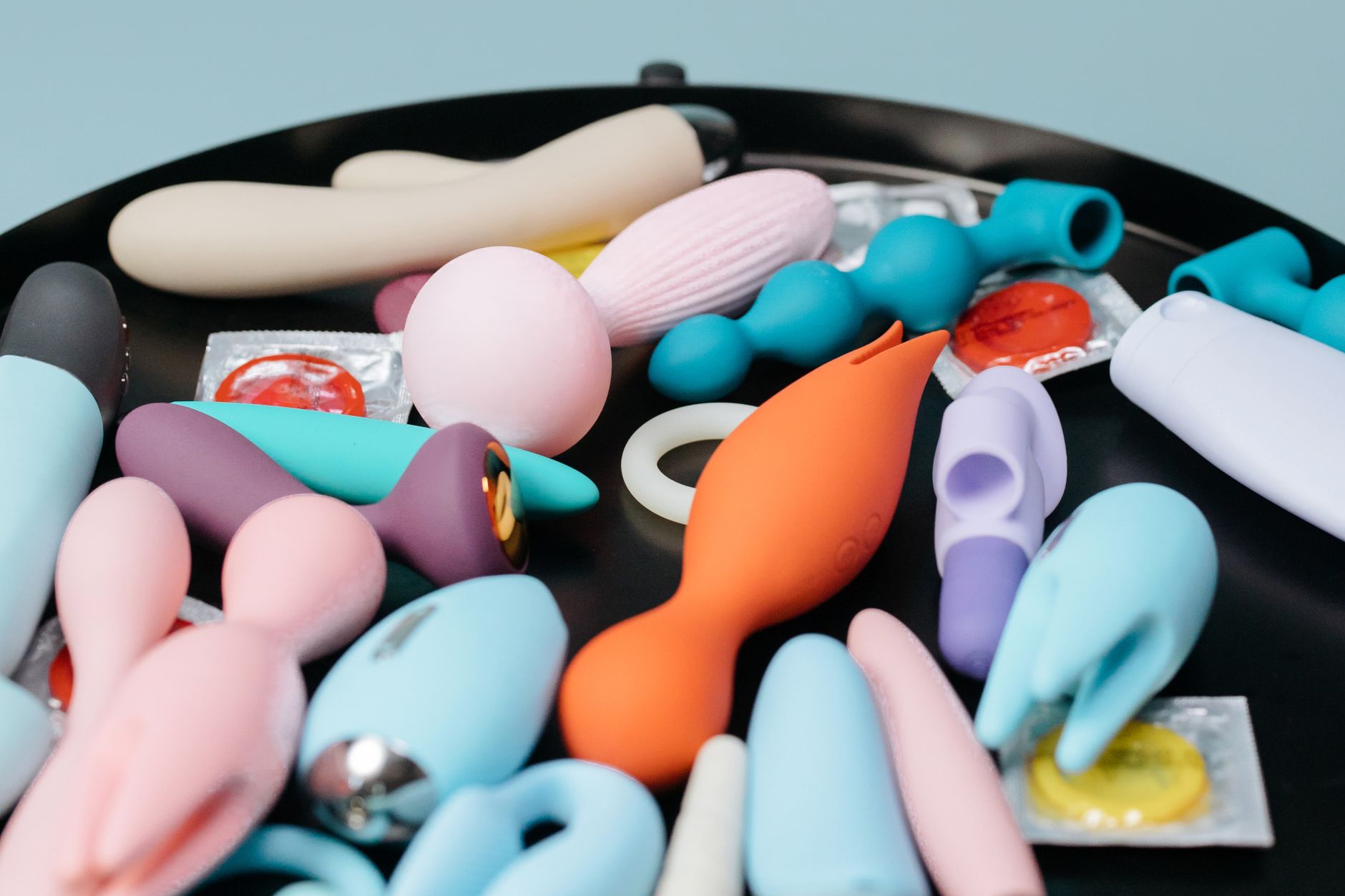
Let's start with the thing nobody says out loud
You want to introduce a toy. Your partner might feel threatened, replaced, or like you're saying their body isn't enough. That's not what you mean at all. But here's the truth. That fear is real for them, and it lives in the gap between what you want to do and how you explain it. This article closes that gap.
A lemon vibrator is not a replacement. It's a conversation starter, a pleasure amplifier, and often the thing that finally lets both of you have the sex you've been too shy to ask for.
Why couples actually resist toys (and why the real answer surprises you)
I've worked with hundreds of couples navigating this territory. The stated objection is always something like "I don't think we need one" or "It feels weird." But underneath, the resistance usually falls into three buckets.
Bucket one: cultural imprinting. We're taught that good sex happens between two bodies, with nothing else in the room. Adding a tool feels like admitting something's missing. It's not. It's the opposite. It's saying "I want more of you, and I want better tools to get there."
Bucket two: it's actually about them. Some partners genuinely worry that introducing a toy means you're bored, or that you find their touch insufficient. This one needs direct conversation, not reassurance alone.
Bucket three: they're intimidated by the tool itself. Lemon vibrators look sleek and intentional. There's a learning curve. The fear is real but manageable.
The conversation you need to have (before you buy anything)
Timing matters. Don't introduce this mid-sex or when you're both drowsy. Pick a calm moment, outside the bedroom, with no phone and no time pressure. I tell my clients to start like this.
"I've been thinking about our sex life, and I really like it. I also think we could explore something that might feel even better. I'm thinking about us using a toy together. I want this for us, not because anything's wrong, but because I think it could add something. What comes up for you when I say that?"
Then stop. Let them respond. Don't fill the silence. Don't defend. Just listen.
If they're hesitant, the next layer is to ask what specifically worries them. Is it that they think it replaces them? That they don't know how to use it? That it feels clinical or weird? Different concerns need different answers.
"If you're worried about me being satisfied with the toy instead of you, here's what I actually want. I want your hands on me and a lemon vibrator at the same time. I want to feel both of you. That's the fantasy."
Or. "I know you're not sure how to use it, and honestly, neither am I yet. We'd figure it out together."
Clarity dissolves 80 percent of the resistance.
Choosing the right lemon vibrator for partnered play
Not all lemon clitoral vibrators are created equal for couples. Here's what matters.
Size and ergonomics matter more than you think. A compact tool like a lemon sucker is easier for a partner to hold or position. It doesn't require their hand to be in a weird angle. They can focus on you, not on preventing hand cramps.
Pattern variety is huge. You want something with multiple speeds and rhythms, because what works solo won't always work when your partner is inside you or when you're navigating two bodies in one space. Settings 1 through 3 on a lemon vibrator give you options for warm-up, intensity, and the approach to orgasm.
Noise level matters more in partnered play than solo play. If your tool sounds like a dental drill, it's distracting. It takes you out of the moment. Look for something quiet enough that you can actually focus on touch and connection.
The material should be body-safe silicone. This isn't a negotiable. Period.
Most couples I work with end up choosing the lemon lem vibrator because it's intuitive, quiet, and feels sophisticated rather than clinical. But the right choice is the one that feels right to both of you.
How to actually use it (positioning, rhythm, and real logistics)
The first time you use a toy together, you're both learning. That's the mindset to bring. Not performance. Learning.
Start with manual stimulation first. You or your partner uses hands. This builds arousal and removes the pressure of "performing" with the toy. Spend 10 to 15 minutes here, minimum. This is not foreplay to skip. This is the foundation.
When you bring in the lemon vibrator, start on a lower setting. Pattern 1 or 2. The clitoris has about 8,000 nerve endings. It doesn't need maximum intensity to feel incredible. In fact, most people respond better to a slower build.
If you're with a partner who has a penis, here's the positioning that works best for most couples. You're on top or in a position where your partner can comfortably reach your vulva with one hand while the toy operates. They hold the vibrator to your clitoris while they're inside you, or they hold it while you're in contact with them in whatever way feels good. The vibrator and their body are working together, not competing.
Communication during is not sexy or clinical. It's essential. "A little faster," "Right there," "Keep that pattern." This isn't direction. It's connection. Your partner wants to know what works. Tell them.
If intensity feels overwhelming, go back to lower settings. If your clitoris becomes sensitive midway through, a short break brings sensation back. This isn't failure. This is how bodies actually work.
When your partner feels left out (and how to fix it)
Some partners report feeling sidelined when a toy enters the picture. Like their role shrinks. This is worth addressing directly, because resentment grows in that silence.
The reframe is simple. The toy isn't replacing your partner. It's creating more space for them. They're now freed up to do other things. Kiss your neck. Hold you. Pay attention to your face and how your body responds. Touch you elsewhere. This is more contact, not less.
Practically, this means assigning their hands a job. "I want your hands on my breasts while I use the toy," or "Hold me while this is happening." Don't let the toy isolate you from each other. Let it integrate.
There's also the orgasm gap. A lot of couples introduce toys because penetrative sex alone doesn't consistently bring the vulva-owning partner to orgasm. When you add a lemon vibrator, suddenly orgasms are more reliable. Some partners experience a hit to their confidence. "I thought you just couldn't come." This is worth naming.
"This isn't about you not being enough. This is about the fact that my clitoris responds to this specific kind of stimulation. Your body and this tool are different things. I can love the way you touch me and also need this. Both are true."
Building the habit without awkwardness
The second time you use a toy together is way easier than the first. By the third time, it's integrated into your normal rotation. You're no longer thinking "we're using a toy." You're thinking "what do we want tonight?"
This shift happens faster if you name it. "That felt really good. Let's do that again next week," or "I loved that. Can we make this a regular thing?" Explicit intention removes the mystery and the worry that it was a one-off experiment that will never be mentioned again.
Don't make it weird by hiding the toy. Keep it in a drawer in your bedroom, somewhere accessible. Normalcy beats secrecy every time. When it's tucked away like contraband, it stays strange.
If your partner wants to use a lemon sexual toy on themselves, solo, that's their call. Some couples are into that. Some aren't. You get to have boundaries. So do they. The respectful move is to check in. "Do you want this to be just for us, or is solo play cool too?"
What to do if it doesn't work the first time
Not every introduction is magic. You might both feel awkward. The positioning might be weird. The sensation might not click. This doesn't mean failure.
Talk about what felt off, without blame. "That setting felt too intense," is different from "You were holding it wrong." One is information. The other is critique. Stay in information mode.
Maybe the lemon vibrator isn't the right toy for you as a couple. Maybe you need more warm-up. Maybe you need a different rhythm. Maybe you need to wait a week and try again, without pressure.
The couples I work with who make this work are the ones who stay curious instead of defensive. "What if we tried it like this?" beats "You're doing it wrong" every single time.
People also ask
Will using a lemon vibrator make my partner feel replaced?
Not if you communicate clearly beforehand. The key is framing. "I want this to feel good for both of us" is different from "I need this because you're not enough." Emphasize that the toy amplifies what you already have, it doesn't replace it. During sex, have your partner touch you somewhere else so the experience stays connected and mutual. Most partners feel less replaced when they're actively involved, not just watching.
How do I introduce a lemon clitoral vibrator if my partner is resistant?
Start by understanding their specific concern. Is it cultural discomfort? Fear of replacement? Intimidation about how to use it? Different objections need different conversations. You might also try education. Reading an article together or watching something factual about toy benefits can help shift abstract fear into concrete understanding. And remember, you can't force readiness. If your partner isn't ready, pushing makes them dig in harder. Sometimes giving space and circling back in a few months works better than immediate persuasion.
Can we use a lemon sucker if my partner has a vulva too?
Absolutely. Couples where both partners have vulvas often use toys on each other or together. The positioning looks different, but the communication and consideration are the same. Some couples alternate. Some use toys simultaneously. There's no one right way. Talk about what you both want.
What if we want to use a lemon vibrator during sex but I'm worried about getting in the way?
Positioning is everything. Talk through the logistics before you're in the moment. If you're using penetration, having the vulva-owning partner on top often gives the best access for a toy. If you're side by side, the partner who isn't penetrating can hold the toy. Practice matters. The first time will feel awkward. By the third or fourth time, you'll have figured out the angles that work for both your bodies.
How do I ask my partner to use the lemon vibrator on me without making it weird?
Direct and warm beats indirect and shy. "I'd love it if you used this on me. I want to feel your hands and this at the same time." If your partner doesn't know how to use it, show them. Start on a low setting. Let them feel it in their own hand first. Then guide their hand. Teaching is an intimate act. Lean into it.
Is it normal for the toy to work better when my partner uses it than when I do solo?
Very normal. A partner's hand carries intention and attention that your own sometimes doesn't. The novelty of being touched a new way also matters. And there's something about relinquishing control that opens sensation. This doesn't mean you've been doing it wrong solo. It just means partnered use hits differently. Both have a place in your routine.
The bottom line
Introducing a lemon vibrator into partnered sex is really about introducing vulnerability. You're saying "I want something specific," and asking your partner to come along. That's brave. It's also the foundation of better sex.
The couples who make this work are the ones who stay in conversation. Not one big conversation, but many small ones. What felt good? What was awkward? What do we want to try next? This ongoing dialogue does two things at once. It makes the sex better. And it makes the relationship better.
Your partner wants you to feel good. A lemon clitoral vibrator isn't the enemy of that. It's a tool that helps you both get there. Frame it that way, and most of the resistance dissolves.
Ready to have the conversation? Start with honesty. "I've been thinking about adding something new, and I want to explore it with you." Everything else follows from that.