Let's be real about what stress does
Years of accumulated stress doesn't just kill your mood. It rewires how you and your partner show up in the bedroom. You stop initiating. You stop asking for what you want. Sex becomes one more thing on an impossible list, so it gets skipped. Then skipping becomes normal. Then normal becomes invisible. And after enough time, the idea of touching each other feels more awkward than intimate.
This is not a relationship failure. This is what prolonged stress does to every couple, regardless of how much you love each other.
What's important: this is also completely reversible. And a lemon vibrator (or really any thoughtful tool like the Lem) becomes less about the device and more about what it represents. Permission. Play. A reason to be in your body together again.
Why a clitoral vibrator breaks the "performance" trap
Here's the thing about rebuilding sex after years of distance: the pressure to "perform" or "get it right" is exactly what's been suffocating you both.
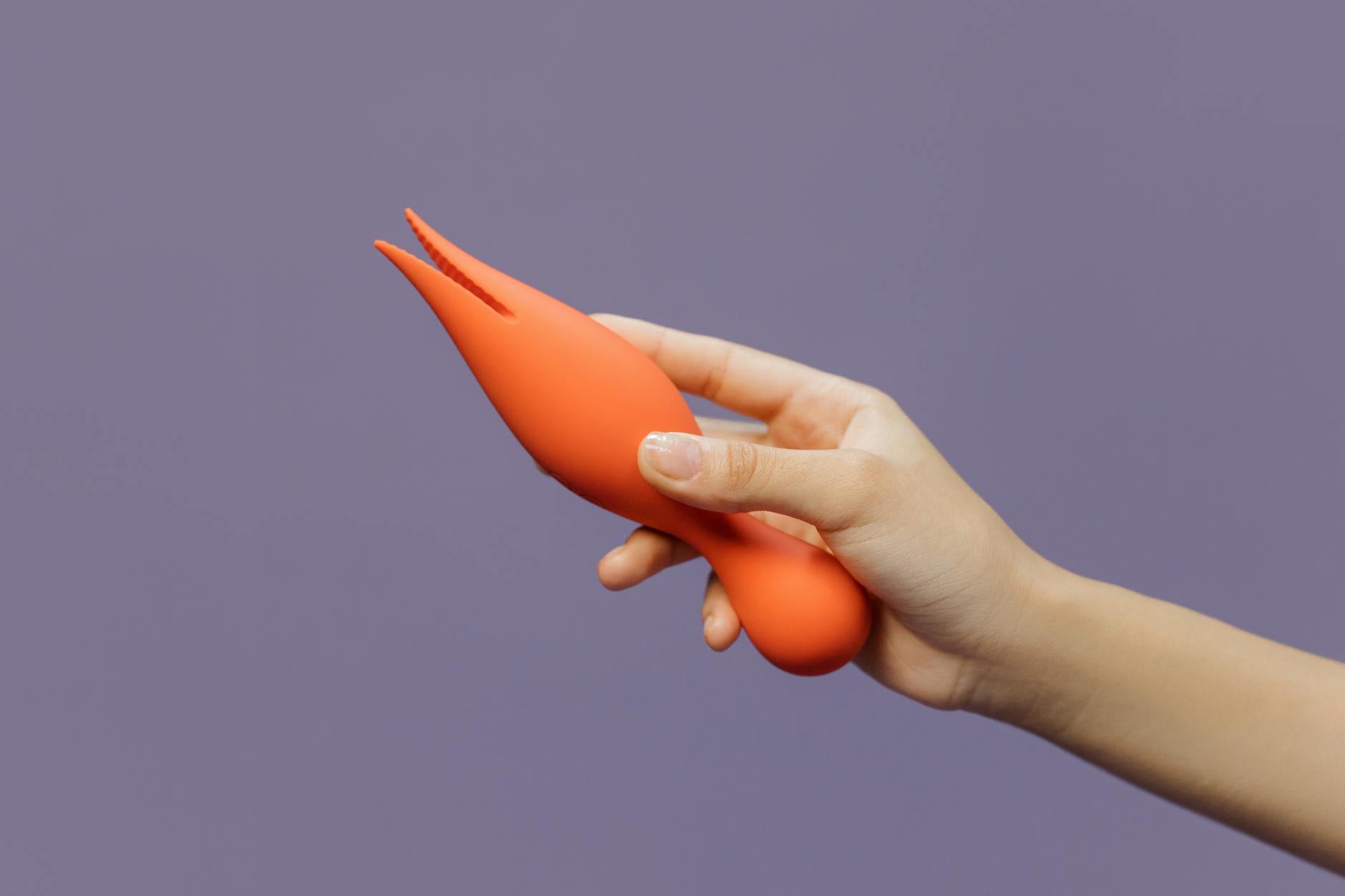
When you introduce a lemon clitoral vibrator into the equation, something shifts. Suddenly the focus isn't on penetration, isn't on whether everyone's in sync, isn't on speed or position. It's specifically on one thing. Sensation. Clitoral stimulation creates a different kind of interaction. There's less expectation of performance and more room for genuine response.
A Lem vibrator, with its gentle suction action, also solves a practical problem couples face after long periods of disconnection: reawakening sensitivity that's been dormant. The lemon sucker technology doesn't require the same hand coordination or rhythm that traditional penetration does. You're not trying to "last long enough" or "time it right." You're just present. Both of you.
Start with conversation, not the device
The biggest mistake couples make is introducing a vibrator hoping it will fix the intimacy gap on its own. It won't. What it will do is accelerate the conversation you actually need to have.
Before you even look at a lemon adult toy, sit with your partner and name what's happened. Not with blame, but with honesty. "We've both been burned out. Sex stopped feeling like connection and started feeling like another obligation." This single conversation is often harder than actually using the device, and it's also the thing that actually heals the relationship.
Then ask: "Would exploring pleasure together feel good right now?" Not "Should we have sex?" That question carries obligation. "Exploring pleasure" implies curiosity, play, no fixed endpoint. After long-term stress, that reframe matters.
How to introduce the Lem without it feeling clinical
Order it together. Or if you've already ordered it, don't surprise them with it on the nightstand. Text them a link. Say something like "I found this. I've heard it's good. Interested in trying it together?" Treat it like you're both deciding, because you are.
The first time you use it doesn't have to be about finishing. This is crucial. Set aside 20 minutes. Dim the lights. Put your phone in another room. Use actual lubricant (water-based if you're using the Lem silicone). Start with the lowest intensity setting.
One partner uses the lemon clitoral vibrator while the other partner is fully present. Touching. Kissing. Watching. Asking what feels good. This is where the actual intimacy rebuilds. Not in the orgasm, but in the fact that you're both showing up, fully. After years of stress-distance, this alone is revolutionary.
The patterns that work best for couples in reconnection
Most couples rebuilding intimacy make the same mistake: they jump to the highest intensity settings looking for fast results. That's like trying to sprint when you haven't exercised in years.
Instead, start with pattern 1 or 2 on your lemon vibrator. These gentler patterns help reawaken sensitivity without overstimulation. Spend at least 10 minutes here. Then, if it feels good, move to pattern 3. You might spend an entire session just here. That's perfect.
The point isn't to reach orgasm (though that might happen). The point is to prove to both of your bodies that pleasure is still possible. That you're still interested in each other. That touch doesn't have to be about obligation anymore.
Many couples find that after a few sessions with a lem vibrator, they start initiating other kinds of touch without it. Because they've remembered what it feels like to be interested. The device isn't the point. It's the gateway.
Why your partner's role matters more than the toy
You can have the best lemon sucker on the market, but if your partner is sitting on the edge of the bed looking at their phone, nothing heals. This is where my couples work gets specific. When you're rebuilding intimacy after stress, the partner who isn't being stimulated directly has the harder job.
They have to stay present. They have to narrate what they're noticing ("Your breathing just changed," "That made you smile"). They have to ask questions ("Does that feel good?" "Want to try pattern 3?"). They have to touch somewhere else. Neck. Inner thigh. Hair.
This is called "active participation," and it's where couples often disconnect. If the person holding the lemon clitoral vibrator thinks they're supposed to be doing all the work, and the other person thinks their job is to lie there and receive, you've just replicated the distance you've been in. Instead, you're dancing together. One person is primarily receiving physical sensation, but both are present and engaged.
What to expect the first few times (and why it's normal)
Honestly? It might feel awkward. You might laugh. You might feel self-conscious. You might not have an orgasm. You might have one immediately. All of these are fine. Normal. Even good, because it means you're trying something new together.
Some couples report that the first time they use a lemon vibrator after years of stress, they don't use it for sex at all. They use it while watching TV together. Or they use it for 30 seconds, then just hold each other. These abbreviated sessions are still wins. You're building tolerance for intimacy again.
Give yourself at least 4-5 sessions before you "evaluate." One of the biggest reasons couples abandon toys is that they expect results on day one. Rebuilding pleasure and trust after long-term stress takes time. A few weeks of consistent, gentle exploration with a lem vibrator can shift an entire relationship's trajectory. The Hello Nancy lemon sexual toy is designed specifically for this kind of patient, collaborative discovery.
The conversation that happens after
This is the secret nobody talks about. The real healing doesn't happen during sex. It happens after. When you're both still in bed, breathing normally, maybe some light touching happening.
This is when you ask: "How was that for you?" And you listen. Not to fix anything, but to understand. "I felt nervous because it's been so long." "I realized I miss this." "I was more interested in watching you than the sensation itself." These are the conversations that actually restore intimacy.
If something didn't work, you say that too. "That intensity was too much." "I got in my head." "I need more time to warm up." None of this requires defensiveness. You're just collecting data about what works for both of you right now. In this season. With all the stress you're both carrying.
When to expand (and when to pause)
After a few sessions of success with your lemon clitoral vibrator, couples often want to escalate. More intensity. Different positions. Longer sessions. That's fine, but check in first. "I'm feeling good about this. Want to try something different next time?"
Sometimes the answer is yes. Sometimes it's "I'm happy where we are." Both answers are correct. The point of introducing a tool like the Lem isn't to create a new kind of performance pressure ("Now we have to do this every time"). It's to give you a bridge back to pleasure together. Once you've crossed that bridge, you use it as often as feels good. Every day. Once a month. Doesn't matter.
If at any point either of you feels uncomfortable, pause. Don't push through. Discomfort during intimacy rebuilding is information. You might need more conversation. You might need to go slower. You might need to see a couples therapist (which is wise after long-term distance anyway). The lemon vibrator is a tool, not a solution to deeper disconnection.
The actual shift that happens
After about 4-6 weeks of regular, gentle use with a Lem or similar clitoral vibrator, most couples report something interesting. They start touching each other more in daily life. Hand on the back of the neck. Longer hugs. Sleeping closer. The vibrator gave them permission to remember that physical affection feels good. Now they're seeking it in other contexts too.
This is when you know it's working. Not because someone's having bigger orgasms, but because both of you are more interested in your own and each other's pleasure. Because you're remembering that your body is yours to enjoy, and your partner's interest in your pleasure matters.
Long-term stress steals a lot from couples. It steals time. It steals presence. It steals the simple joy of being interested in each other sexually. A lemon vibrator can't give all of that back. But combined with honesty, curiosity, and patience, it can remind you both that it exists to be reclaimed.
FAQ: Couples Rebuilding Intimacy With Clitoral Vibrators
What if one partner is nervous about using toys together?
Nervousness is almost universal the first time. Start with non-sexual context. Talk about it over coffee, not in bed. Watch a video together from Hello Nancy about how to use a lem vibrator. The person who's nervous sets the pace. If they need to just hold the lemon vibrator and look at it for three sessions before anything else happens, that's the pace you go.
Can a lemon clitoral vibrator really rebuild intimacy, or is that overstated?
A tool can't rebuild intimacy on its own. But it can remove one massive barrier: the awkwardness of restarting. After years of stress-distance, starting sex again feels impossible. A vibrator gives you a reason to try. A permission structure. A conversation starter. The actual intimacy comes from what you do with that opening.
How often should couples use a Lem vibrator when rebuilding connection?
Start with once or twice a week. This is frequent enough to build momentum but not so much that it feels like another obligation. After a few weeks, let desire guide you. Some couples maintain this rhythm indefinitely. Some move to every other week. Neither is "wrong." You're collecting information about what maintains connection for you both.
What if we try it once and neither of us is interested in doing it again?
Then you've learned something. Maybe the tool isn't the issue. Maybe the deeper disconnection needs different support. This could mean couples therapy, individual therapy, or just time and conversation before you're ready to explore pleasure together. Forcing a vibrator into a relationship that needs actual help is just adding another failure to the pile. Don't do that.
Is a clitoral suction toy like the Lem actually better than other vibrators for couples reconnecting?
Clitoral vibrators offer a different kind of sensation and require less performance. You're not thrusting. You're not timing anything. You're just receiving sensation while being present with your partner. For couples rebuilding after stress, this lower-pressure approach often works better than traditional vibrators. But different couples prefer different things. If you want to try, start with one.
What if we both have low libido after stress and the lemon vibrator doesn't immediately spark desire?
Low libido after prolonged stress is real, and sometimes it's worth discussing with a doctor. But low libido also responds to consistency. Using a lem vibrator gently and regularly, without pressure, can actually wake up desire over time. You're sending a signal to your brain that pleasure is safe again. Sometimes that takes six weeks, not six days. Stay patient.
Moving forward
Rebuilding intimacy after long-term stress is one of the hardest things couples do. It requires vulnerability. It requires showing up even when it feels awkward. It requires forgiving both yourself and your partner for the distance that accumulated.
A tool like a lemon vibrator or the Lem can't do this work for you. But it can give you a structure. A reason to show up together. A conversation starter. And sometimes, that's exactly what you need to remember why you wanted to be intimate in the first place.
If you'd like support navigating this transition with your partner, we're here to help. Reach out anytime.