
How to Use a Lemon Vibrator When Your Partner Wants More Frequent Sex
Let's be real: desire mismatch is one of the most common, least talked about relationship ruptures. One partner wants sex twice a week. The other wants it twice a month. Neither person is wrong. But the gap between them starts to feel like a referendum on love, attractiveness, or commitment. It's not. It's just biology, stress, life stage, and sometimes incompatibility about what sex means to each person.
A lemon vibrator isn't a fix. But it can be a bridge. Here's how.
What desire mismatch actually does to a couple
The higher-desire partner often feels rejected and unattractive. The lower-desire partner feels pressured, guilty, and resentful about sex becoming a performance instead of something they genuinely want. Both people end up bracing for "the conversation" instead of enjoying their body together.
After working with hundreds of couples on this, I've noticed something crucial: the problem isn't the frequency itself. It's the feel. When one partner feels obligated and the other feels perpetually disappointed, sex stops being intimate and becomes a source of shame for both of you.
That's where a tool like the Lem vibrator changes the dynamic entirely.
Why a lemon clitoral vibrator works for desire gaps
A lemon sucker or clitoral vibrator reframes sex entirely. Here's why: instead of framing sex as "intercourse or nothing," a lemon vibrator allows both partners to have pleasure on their own timeline without it feeling like a compromise.
For the lower-desire partner, it means you're not pressured into penetration or lengthy foreplay you don't have bandwidth for. A lemon clitoral vibrator gets you to arousal and orgasm efficiently and reliably. You get to feel good without the guilt that your body took too long.
For the higher-desire partner, it means being with your partner in pleasure without them being present reluctantly. You're not convincing someone to want you. You're choosing to create intimacy together, which feels fundamentally different than resentful obligation.
Honestly, I recommend couples explore this together before reaching a therapist's office about libido mismatch.
The conversation that has to happen first
Introducing a toy into a relationship with desire friction requires honesty, not seduction. You need to separate three things:
- What you each actually want from sex
- Why the gap exists (stress, hormones, relationship disconnect, conflicting definitions of intimacy)
- How a lemon vibrator serves both of you, not just one
The worst framing: "I got this to satisfy you because you're not satisfied with me." That reads as rejection and makes the toy feel like proof of failure.
The right framing: "I want us to experience pleasure together more often. I also don't want either of us to feel guilty. What if we explored this together?" Notice what shifted. Now it's collaborative, not compensatory.
If your partner resists the idea initially, don't push. Desire mismatch usually points to a bigger conversation that needs to happen first. Sometimes the issue isn't frequency at all. It's emotional intimacy, resentment about household labor, or feeling unseen outside the bedroom.
How to use a lemon vibrator to reconnect, not just solve logistics
Once you've had the real conversation, here's how to make the lemon clitoral vibrator part of rebuilding that connection:
Start together, in low-pressure situations
Don't make the first time about penetration or a goal. Just explore it while you're both present and clothed. Let the lower-desire partner hold the Lem or the Lollipop vibrator and experiment with it on themselves while the higher-desire partner is there, touching them, watching, present. The point is not efficiency. It's participation.
Use it to ease into sex when you're mismatched that day
Say it's a day when one partner wants sex and the other doesn't feel like it. Instead of the usual friction, you have a third option: maybe you start with the lemon vibrator for 10 minutes, just foreplay, no pressure to progress to anything else. Often, arousal builds. Sometimes it doesn't, and that's fine too. But you've created a middle ground where both people feel like their needs matter.
Make it about pleasure, not performance
For the partner with lower desire, a lemon sexual toy removes the pressure to reach orgasm through conventional stimulation alone. You can have an orgasm reliably, which means you're less in your head about whether you'll finish, whether you're taking too long, whether your partner is frustrated.
For the higher-desire partner, watching your partner experience real, consistent pleasure often satisfies something deeper than frequency alone. You wanted to feel wanted. This is actual evidence that your partner is capable of pleasure.
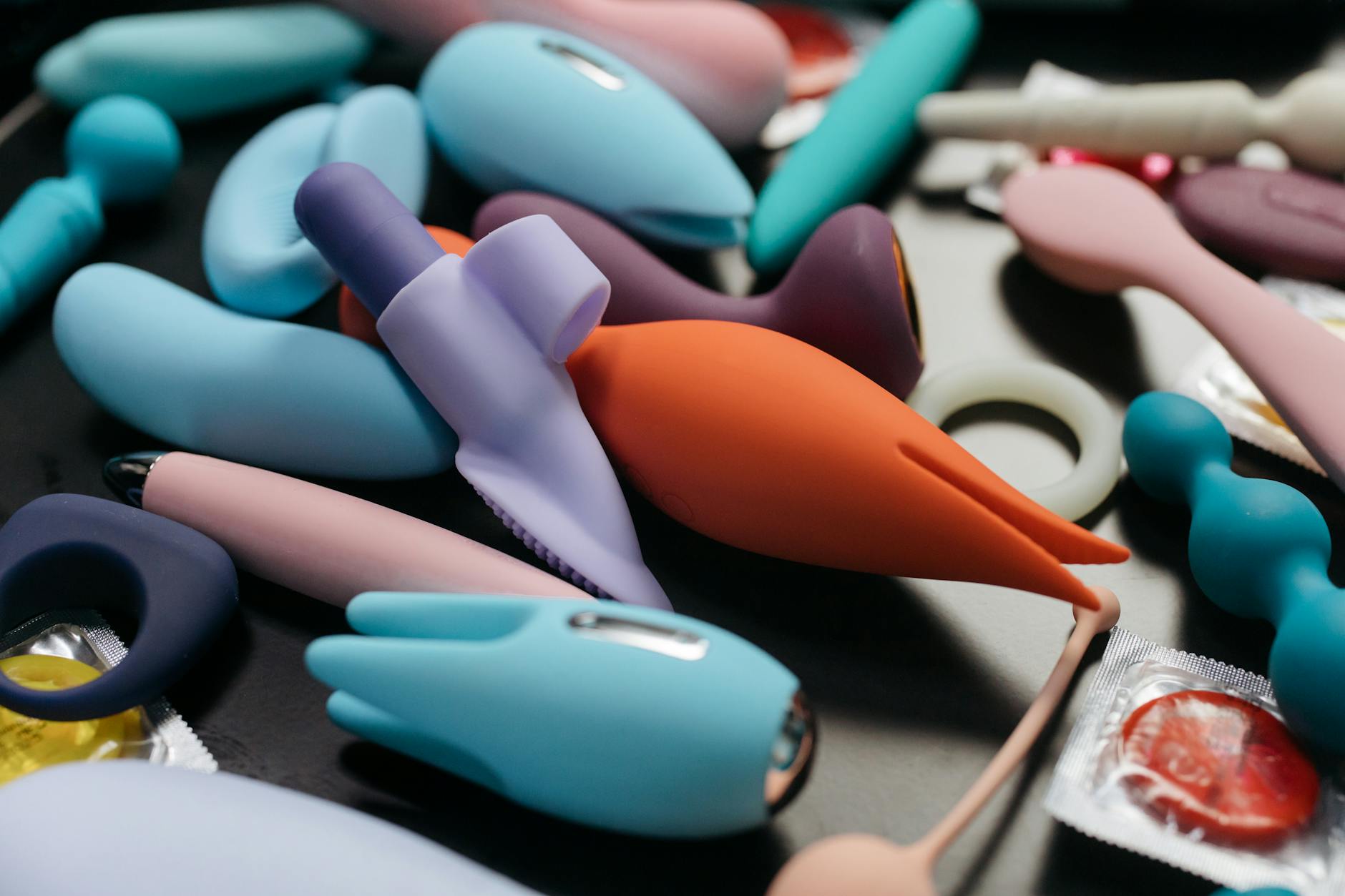
Photo by cottonbro studio on Pexels
The actual mechanics: using the Lem during partnered sex
If you're moving toward intercourse but want to integrate a lemon clitoral vibrator, here's what works practically:
Start with the vibrator externally while you're still in foreplay. Let your body get to a place where you're aroused and relaxed. Then, if penetration feels right, you can continue using the Lem on your clitoris during sex. The suction pattern gives you that focal pleasure while your partner is present and inside you. This isn't about replacing their part. It's about each of you having what you need simultaneously.
For some couples, the lemon vibrator becomes part of foreplay itself, not part of intercourse. That's equally valid. The point is that you're together and both experiencing pleasure, which softens the sting of desire mismatch.
What actually changes in the relationship
I've watched couples move from a place of "why don't you want me" to "we get to have pleasure more often together" just by shifting how they approach sex. The Lem vibrator or other lemon clitoral vibrators don't magically solve incompatibility, but they do remove the shame that usually makes desire gaps worse.
When the lower-desire partner doesn't feel guilty, and the higher-desire partner doesn't feel rejected, you have space to actually talk about what's going on underneath. That's where real healing happens.
Sometimes you discover that one partner's lower desire is actually exhaustion, stress, or resentment that sex didn't address. Sometimes you realize you have fundamentally different needs and you have to decide together whether you can meet each other halfway. But at least you're having that conversation from a place of mutual pleasure instead of mutual disappointment.
When to keep exploring, and when to get help
If after a few weeks of using a lemon vibrator together you're still feeling the sting of desire mismatch, that's not failure. That's information. It means the gap is about something deeper than frequency.
That's when couples therapy or sex therapy actually works because you're not starting from a place of accusation. You're starting from a place where you've already tried to meet each other and discovered you need more support. A good therapist can help you figure out whether the mismatch is solvable or whether you're fundamentally incompatible.
Even then, tools like a lemon clitoral vibrator remain useful. They're just not the whole solution.
The honest bottom line
Desire mismatch doesn't mean your relationship is broken or that one of you is selfish. It usually means life is happening, bodies are changing, or you need to get on the same page about what sex actually means to each of you.
A lemon vibrator gives you a way to experience pleasure together without the guilt, pressure, or shame that usually surrounds frequency conversations. That alone changes the temperature of the relationship. When you both feel wanted and capable of pleasure, the gap matters less. Sometimes it even closes on its own.
People also ask
Can a lemon vibrator replace sex in a mismatched relationship?
No, and that's not the goal. A lemon clitoral vibrator is a tool that allows both partners to experience pleasure together without obligation or resentment. But if one partner genuinely wants more intimate connection, a toy alone won't address that. The real work is understanding what each person needs from sex and whether you can meet each other there.
Will using a lemon vibrator make my partner think I'm not satisfied with them?
Only if the conversation around it is framed poorly. If you introduce it as "I want us both to feel good more often," it reads as collaborative. If you frame it as "you don't satisfy me," it will land as rejection. The tool itself is neutral. The story you tell about it determines whether it brings you closer or further apart.
What if my partner is threatened by a lemon sexual toy?
That's often a sign that desire mismatch is masking something else. Insecurity, shame about their own sexuality, or fear that a toy means they're being replaced. Have the conversation before you introduce the tool. Ask what they're actually worried about. Usually, it's something that needs to be addressed directly, not through a toy.
How often should we use a lemon vibrator if our libidos are mismatched?
There's no standard. Some couples use it every time they have sex. Others use it when one person isn't feeling up to conventional sex but wants to stay connected. The goal is removing pressure, not creating a new obligation. If using the Lem feels like another "should," it's not working.
Does using a lemon clitoral vibrator make it harder to reach orgasm without it?
Not typically. In fact, the opposite often happens. When the lower-desire partner knows they can rely on consistent pleasure from a tool, they're more relaxed and less in their head during sex, which usually makes it easier to be present and enjoy all kinds of stimulation.
What if my partner wants me to use a vibrator but I'm uncomfortable?
That's a conversation worth having. Discomfort often signals shame or past messages about sexuality. If you're the partner with higher desire pushing for a tool, give your partner space to explore their own comfort first. Forcing a lemon vibrator into someone's hands creates more resentment, not less.
Need guidance on how to approach desire mismatch in your relationship? Get in touch with us. We're here to help you find solutions that work for both of you.
Related reading
If desire mismatch is affecting your relationship, these posts might help clarify what's happening underneath:
How to Use a Lemon Vibrator When Your Partner Has a Lower Sex Drive digs into the lower-desire perspective specifically.
How to Use Lemon Vibrators to Reconnect With Your Partner After Time Apart addresses emotional distance that often underlies desire gaps.
How to Rebuild Clitoral Sensitivity After Stopping Hormonal Birth Control explores how life changes shift desire, sometimes dramatically.