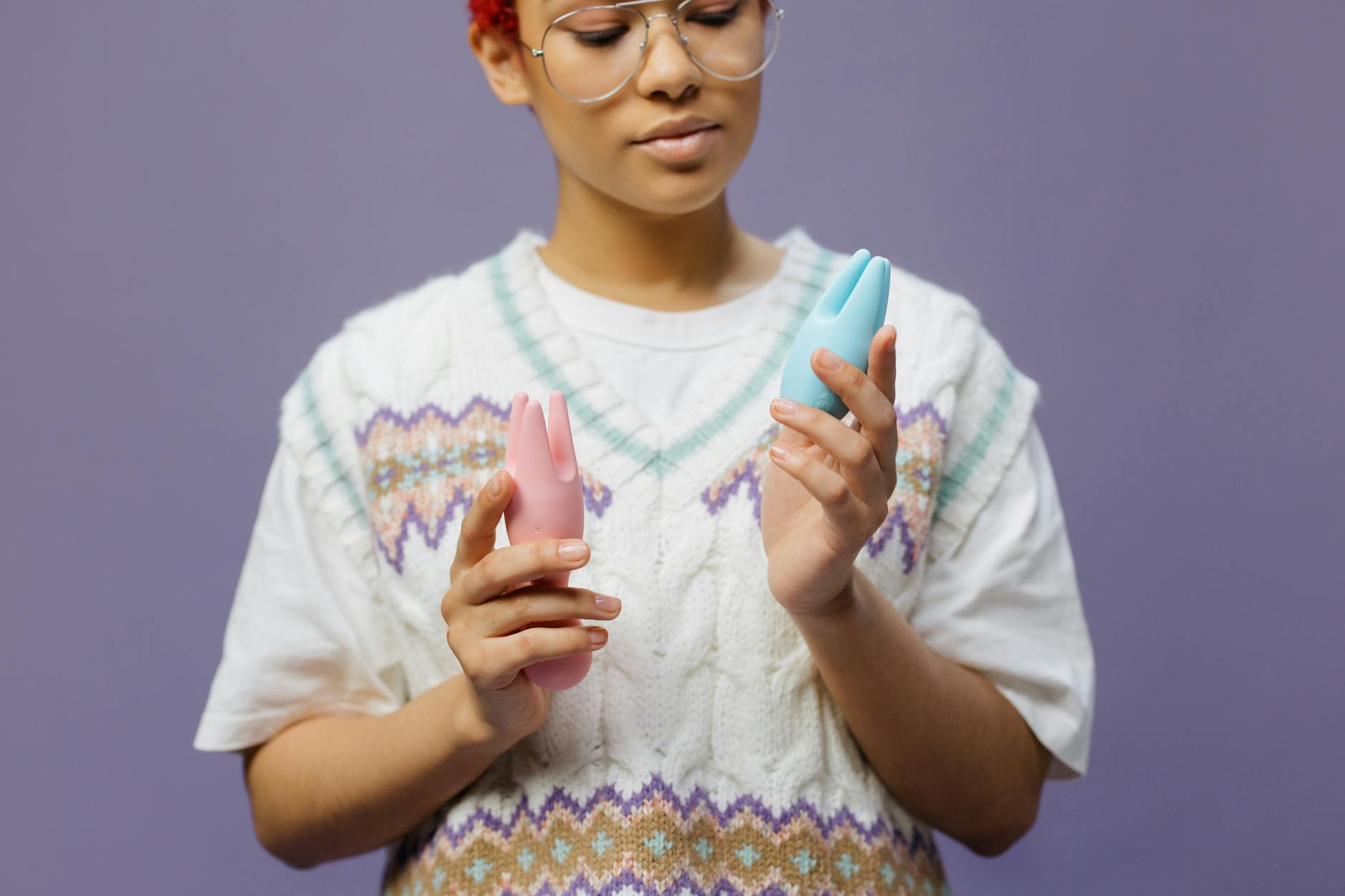
Here's the thing about mismatched sex drive
It's not a personal rejection. It's not a sign your relationship is broken. It's one of the most common friction points long-term couples face, and it's almost never about love.
When one partner wants sex more often or with more intensity, the lower-desire partner often interprets frequency requests as pressure. The higher-desire partner feels unwanted. Both spiral into resentment. A lemon vibrator or other clitoral vibrator doesn't fix that dynamic on its own, but it does unlock something crucial: the ability to meet your own pleasure needs without making it your partner's responsibility.
Why this matters more than you think
Mismatched libido is cited as a contributing factor in roughly 40% of long-term relationship breakups. Not because the sex itself is the breaking point, but because the conversation around it becomes weaponized. The higher-desire partner starts interpreting refusal as "you don't love me." The lower-desire partner starts feeling guilty and resentful of the pressure. Neither is true.
What actually happens is this: the lower-desire partner shuts down because sex feels obligatory rather than optional. The higher-desire partner escalates requests because they interpret avoidance as rejection. The cycle spirals.
Using a lemon clitoral vibrator for solo pleasure while your partner has lower desire does something counterintuitive. It removes the zero-sum math. Instead of competing for the same experience, you're each honoring your own body's needs.
The conversation you actually need to have first
Before you reach for a vibrator, you need to untangle why your partner's libido is lower. This matters because the solution changes depending on the root.
Is it about you specifically. Do they want sex just not with you, or not with anyone. If it's situational (stressed about work, dealing with health issues, on medications that affect desire), the framework is different. If it's relational (they're checked out emotionally), you're dealing with something deeper.
Is it biological or circumstantial. Antidepressants, birth control, hormonal changes, sleep deprivation, chronic stress, and a hundred other factors tank desire. This isn't character or attraction. It's physiology.
Are they aware it's a pattern. Some partners genuinely don't realize their libido has shifted. Others know but feel ashamed. Others feel no problem at all. You can't solve what nobody acknowledges.
Have this conversation outside the bedroom. Not before sex, not during rejection, not when you're both frustrated. Pick a neutral moment and approach it as allies, not adversaries. "I've noticed we want sex at different frequencies. I don't think either of us is wrong. I want to figure out what works for both of us."
Where the lemon vibrator enters the picture
Once you've had that conversation, the lemon sexual toy becomes a practical tool, not a workaround for a broken connection.
Here's what I recommend to couples in your situation:
Use it for solo pleasure without shame. This is the non-negotiable part. Your body deserves pleasure whether your partner is interested or not. This isn't cheating. This isn't you rejecting them. This is you saying your sexual health matters.
When you use a lemon vibrator or other clitoral vibrator independently, you're also doing something else: you're stopping the resentment feedback loop. You're no longer waiting for your partner to want what you want. You're taking responsibility for your own pleasure.
Use it sometimes with your partner present, if they're comfortable. Not as performance. Not as foreplay designed to turn them on. Just as part of intimacy that might look different than what you imagined.
Some lower-desire partners find it genuinely sexy to watch their partner use a lemon adult toy. Others feel awkward. Both reactions are fine. But for some couples, watching becomes a bridge. The higher-desire partner gets to experience pleasure and connection. The lower-desire partner doesn't have to perform. Everyone's needs are being met simultaneously.
Be clear that this is about you, not about replacing them. The conversation matters. "I want to use this sometimes because my body needs this, and I don't want that need to become pressure on you" is different from silence, which your partner might interpret as resentment.
What to do if your partner feels threatened
Some partners interpret vibrator use as a referendum on their own sexual prowess. "If you used a vibrator, I must be bad at this." That's not true, but the feeling is real.
Here's where the conversation splits. You can explain all day that vibrators feel different, not better. That clitoral vibrators work with your nervous system in ways a body can't replicate. That you don't want to replace them, you want to take pressure off both of you.
If your partner still feels threatened, the issue isn't the vibrator. It's insecurity or a deeper disconnection. That's therapy territory, not vibrator territory.
What I see in my practice: couples who navigate this honestly almost always come out the other side with more intimacy, not less. Not because the vibrator fixed anything. Because they stopped making sex a battleground.
The Lem vibrator specifically for this dynamic
If you're looking at lemon clitoral vibrators, the Lem is worth considering if your partner's lower libido comes with any numbness or difficulty with sensation. The suction technology works differently than traditional vibration. It stimulates without requiring intensity, and it works particularly well for people who find direct vibration overwhelming.
This matters because some lower-desire partners have undiagnosed sensation issues or anxiety around intensity. A lemon sucker might feel gentler and less performative.
The real work: rebuilding desire as a team
Using a lemon vibrator solo isn't the end goal. It's the pressure relief valve while you do the actual work.
That work looks like this: create space for your partner to want you again without obligation. Sometimes that means therapy. Sometimes that means addressing the physical issue (medication change, sleep, stress management). Sometimes that means reconnecting emotionally first, then physically.
But it always requires both people acknowledging that mismatched desire isn't a character flaw. It's a logistical problem with a solution.
In my years working with couples, the ones who survive this phase are the ones who refuse to weaponize pleasure. They use tools like clitoral vibrators as practical solutions, not evidence that something is broken. They communicate. They take responsibility for their own bodies. They stop keeping score.
Your pleasure matters. Your partner's lack of desire isn't your fault. And a lemon clitoral vibrator can absolutely be part of honoring both truths at the same time.
People also ask
Is it normal for partners to have different sex drives?
Completely normal. Most long-term couples experience libido mismatches at some point, usually triggered by life changes, stress, health shifts, or relationship phases. Research suggests roughly 60% of couples report some degree of desire discrepancy. The key is how you communicate about it, not whether it exists.
Will using a vibrator make my partner feel inadequate?
Possibly, if the conversation around it is unclear. But if you frame it as meeting your own needs rather than replacing them, most partners understand. The partners who struggle most are the ones where the vibrator appears without explanation or where the higher-desire partner uses it as implicit criticism. Transparency matters.
Can a lemon clitoral vibrator help rebuild intimacy after my partner loses interest?
It can be part of the solution, but it's not the solution itself. The vibrator removes pressure, which sometimes allows desire to return naturally. But if the low libido is rooted in emotional disconnection or unresolved conflict, you need to address that separately. Consider couples therapy alongside practical tools.
What if my partner refuses to discuss sex drive differences at all?
That's a communication issue that exists beyond vibrators. If your partner won't talk about a real relationship need, the problem isn't the lemon adult toy. It's avoidance. A therapist can help create safety around these conversations. Don't let shame or guilt silence you.
How often should I use a vibrator if my partner has low libido?
As often as your body needs. There's no "right" frequency. Some people use a lemon vibrator weekly. Others daily. The point is autonomy. You're not asking permission. You're not performing for anyone. You're taking care of yourself.
Does using a vibrator solo damage my relationship?
No. Shame, secrecy, and resentment damage relationships. A vibrator used openly and communicated about clearly is actually a sign of health. You're honoring your body and your partnership by not letting unmet desire create bitterness.
The bigger picture
Mismatched sex drive isn't a problem to solve so much as a dynamic to navigate. The couples who do this well aren't the ones with perfectly matched libidos. They're the ones who stopped treating desire as a referendum on love.
A lemon vibrator is a tool. Honest conversation is the actual medicine. Use them together, and you might find that your relationship gets stronger, not weaker, through the friction.
For more on navigating intimacy challenges with a partner, consider reading about how couples with mismatched arousal timing can use vibrators together or how to rebuild intimacy after long-term stress. Both explore related dynamics that might help you feel less alone in this.
Your pleasure deserves to exist alongside your partnership. Not in spite of it.